I’m an eclectic person, who grew up in New York, lived overseas for many years and have a boat, Dauntless, a 42 foot Kadey Krogen trawler yacht. Dauntless enables me to not only live in many different parts of the world, but to do it in a way that is interesting, affordable, with the added spice of a challenge.
Dauntless also allows me to be in touch with nature. As the boat glides through the ocean, you have a sense of being part of a living organism. When dolphins come to frolic, they stay longer if you are out there talking to them, watching them. Birds come by, sometimes looking for a handout; sometimes grateful to find a respite from their long journey.
I grew up on the New York waterfront, in the West Village, when everything west of Hudson St. was related to shipping and cargo from around the world. For a kid, it was an exciting place of warehouses, trucks, and working boats of all kinds: tugs and the barges and ships, cargo and passenger, they were pushing around.
My father was an electrical engineer, my mother an intellectual, I fell in between.
I have always been attracted to Earth’s natural processes, the physical sciences. I was in 8th grade when I decided to be a Meteorologist.
After my career in meteorology, my natural interest in earth sciences: geology, astronomy, geography, earth history, made it a natural for me to become a science teacher in New York City, when I moved back to the Big Apple. Teaching led to becoming a high school principal to have the power to truly help kids learn and to be successful not only in school but in life.
Dauntless is in western Europe now. In May and June, I will be wrapping up the last two years in northern Europe, heading south to spend the rest of the year in Spain & Portugal.
Long term, I’m planning on returning to North American in the fall of 2017 and from there continuing to head west until we’re in Northeast Asia, Japan and South Korea, where we will settle for a bit.
But now, my future lies not in NY or even Europe, but back to the water, where at night, when the winds die down, there is no noise, only the silence of the universe. I feel like I am at home, finally.
To get this going again, I think I will post more pictures and let them speak for themselves.
Today, we stopped at a restaurant that looked good because it was pretty crowded just at the beginning of lunch (11:30).
Turned out that was a very good indication and in fact, it was certainly the best beef I’ve had in Vietnam.
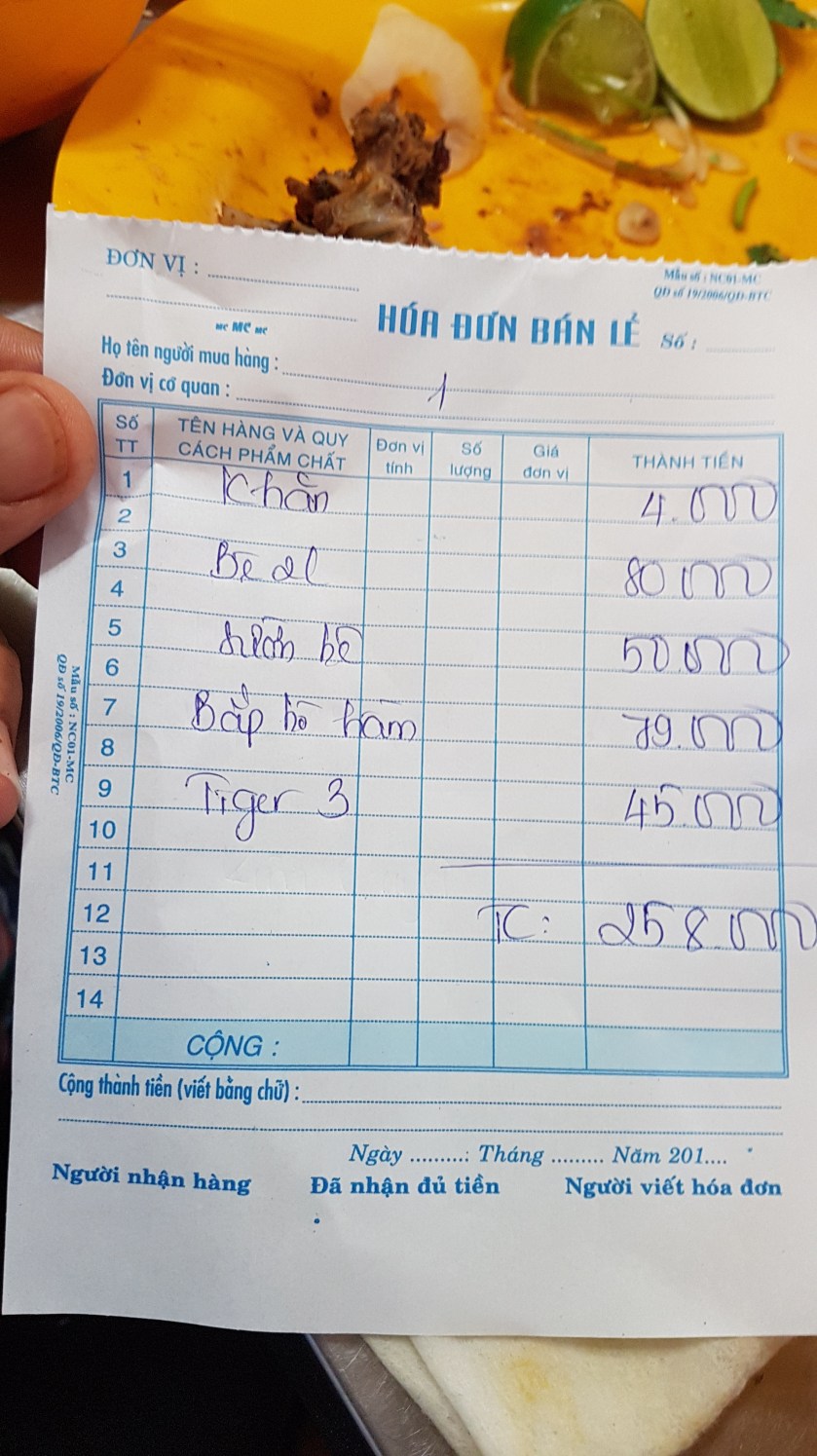
The pictures speak for themselves. It’s basically 3 items:
thinly sliced pieces of cow from the cow that’s under the plastic in the picture. Rare, it was very good, very tasty. Greatly exceeded my expectations.
Grilled beef ribs (?) is what the menu said, but the bone pieces were very small. Extremely tasty.
Hot Pot that wasn’t, but is. This means that when Trinh ordered it, she said it was not hot pot and continued that line even after it arrived at our table. I really liked it as she did also. I never had a clear understanding of why it wasn’t “hot pot”, but then , what el
Our plate of grilled beef
se is new!
The bill for all of this, including 3 beers, came to $14USD
Our rare beef, hot pot, and a soup of coagulated blood.our first dish, rare beef
It did get me to think about how I provisioned the boat the first time in 2014 and then, subsequently for the westbound trip, 11 months ago.
It’s hard to imagine that one year ago, Dauntless was in Rabat, Morocco and I took a quick 10 days first ever trip to Japan. But that’s yet another story.
What food did we put on the boat for our New England to Ireland passage in 2014?
There are a number of factors that had to be taken in account and planned accordingly:
Dauntless, with its 700-gallon fuel tanks, 300-gallon water tanks and a Katadyn water maker, capable of making 160 gallons of water a day (24 hours), had the range to make this 2600 nm trip easily.
With a full-size refrigerator and freezer, we did not have to cover our eggs in Vaseline like sailors of old, but our refrigerated space was not unlimited. While Romaine lettuce will last two+ weeks, did we really want to fill our fridge with bulky lettuce?
The trip should take 26 days underway. We did plan on stopping in the Azores, but I didn’t want to be required to make that stop just in case. So, we would plan on having at least 30 days’ worth of everything.
Lastly, everyone asks what happens if the engine breaks and can’t be fixed or the propeller falls off or we get hit by a meteorite? Well, if the latter, no trace would ever be found, but for the former, what was the plan? Look at a map. Let’s say we were disabled in the middle of the North Atlantic, what would I have done?
Well, I would NOT have called the Coast Guard. If you call the CG, they come and will take you off the boat. Two problems with that plan:
Dauntless can leave me; but I’m not leaving her. My life raft is on the fly bridge. When the water gets to the fly bridge, I’ll consider deploying the raft and setting off the EPIR.
Despite what you see on TV, being rescued, hoisted off a boat in the ocean has a lot of risk for both rescuers and rescues. No thanks. Maybe if I’m in the lift raft, but not from a floating boat.
So, that leaves us with what was the plan? Propeller has fallen off and is now on the bottom of the Atlantic or on its way (FYI there is a formula to determine exactly how long something takes to settle on the bottom of the ocean. For a grain of sand, it takes more than a year, for a propeller, it’s probably a 6-hour trip).
The prevailing winds are westerly, from the west. Therefore, sooner or later, those winds will push Dauntless at 1 to 2 knots towards Europe. So, the one-month trip becomes 3 or 4. Not great, but doable.
That gives me my goals for provisioning:
One month of food that will be consumed.
3 to 6 months of foods that will most likely not be eaten, but is easy to store and will keep forever.
Only get stuff I like to eat.
So that was easy. In practicality, it’s like taking a trip to Costco and buying like you won’t, can’t, be back for half a year. That’s what we did:
Fresh food for two weeks
Freezer stocked with meats, pork, beef, chicken, all things we would eat at home.
Longer term supplies consisted of those items that we do like normally, but also will last practically forever:
Peanut butter, 2 large Costco sized jars
Canned sardines, 2 dozen tins
Rice, 10 pounds Japanese
Condiments, olive oil, etc.
Canned tomatoes, 24
Canned corn, 24
Crackers, dry pasta,
Canned beans
Dauntless cooks with propane. It fires the Weber grill and the Princess three burner stove. I’ve never used the oven portion, since the Weber does well if I have to bake something.
In hindsight, I had too much canned stuff that I normally don’t eat, beans and tomatoes come to mind. On the plus side, when provisioning for last year’s Atlantic Passage, I hardly had to buy any canned things, only some canned sardines from Spain. I’m still eating the peanut butter from 2014! I finally ran out of rice this past summer.
One also must keep in mind that you need to have protein that you like, keeps forever and is easy to store. One can probably live forever on peanut butter and sardines. Rice also keeps well, though I don’t eat very much, as it took me 3 years to eat 10 pounds.
Leaving Spain last year, I did have about 6 liters of UHT milk. I don’t drink milk, but I really like it in coffee in the morning, so this was something that really went to my peace of mind, though I could easily have lived without it. (I stopped drinking milk during the 6 months I was living on the Arctic Ocean on Ice Island T3. Never drank it again, as in a glass of milk).
In hindsight, the one thing I should have had was fishing tackle. Even though I don’t fish, it’s foolish not to have the capability if crossing an ocean.
But looking at our steak we enjoyed on Christmas Day, 900 miles from Martinique, I need to go find some red meat!
My northern Europe pictures and some videos from April thru November 2016, including the painting of Dauntless in the spring and a few of my side trips to Galicia and Veneto, Italy.
Most galleries are in chronological order. The date time group is also embedded in the file name. Please forgive all the redundancy. It’s always easier to take too many pictures than not enough, though it makes sorting after the fact a real PIA.
Also, should you see anything and have a specific question, please feel free to email me.
Kadey Krogen Rendezvous 2017
Richard on Dauntless
Dauntless has come so far
Dauntless’ Second Atlantic Passage
Four Legs from Europe to the Caribbean
Leg 1 Rota Spain to Rabat, Morocco, via Gibraltar to fuel up
250 nm
50 hours total
Leg 2 Rabat Morocco to Las Palmas, the Canaries (unexpected stop)
600 nm
4 days, 1 hr., 35 min
Avg speed 6.1 knots
Leg 3 Las Palmas to Heiro, the western most island in the Canaries, Fuel top-up
172 nm
31 hours and 45 min
5.5 knots
The last & biggest leg, the only one that mattered, the Canaries to Martinique
460 hours, (19 days, 4 hours)
2582 nm
7 knots
The “Oh, BTW, you still have 2000 miles to go” leg, Martinique to Panama Canal and Mexico
460 hours, (19 days, 4 hours)
2582 nm
7 knots
Same strong easterly trade winds; same large, mixed seas
Avg roll +13°/-09° ext 22°/-10°
Overall Winds & Seas
Conditions are Very Different than the North Atlantic
Trade winds prevent turning back
Constant wind speeds of 20 to 35 knots
Direction varied over 90° from NE to SE
3 wave sets produced large 25° roll every 8 to 10 minutes for 3 weeks
NE & SE wave sets, smaller, longer period
wave heights predominate 10 to 15 feet at 8 seconds
3 different wave sets produced large 25° roll every 8 to 10 minutes for 3 weeks
First week very disconcerting to have stern fall to stbd so suddenly every periodically
Since leaving North Africa, until the Panama Canal, more than 5,000 nm and more than 60 days underway, all but two of those days required the paravane stabilizers.
Entering the Pacific and turning northwest from Panama City, in the first four days we had no need of stabilization. They call it the Pacific for a reason.
Crises In the mid-Atlantic
Fuel Loss
What Happened
Possible Solutions
What I did
What I now think I should have done (hint: Much Ado About Nothing)
Hydraulic Hose for Rudder failure
What Happened
I was screwing around
Possible Solutions
What I did
First fix did not work
Spares, spares and more spares (but not the right fitting)
What I now think I should have done
Overall Summary of My Second Atlantic Passage
Considerably harder than I had expected
I’m still organizing the data, but the big take-away, is that the fuel consumption for the last two years has been about 1.5 gal/ hr. or a little above 4nm/gal
Average cost has run between $75 to $133 per day when I’m on the boat. Even during the most recent passage, cost was $104 per day, with fuel being $80 a day.
I’ve dropped my watch a number of times on my tile floor. A couple of times, the crystal has popped off. Just
My Skagen
pressuring it back on was simple.
Then, once the face also came off, as well as the minute hand. That took a bit more effort and thought to put straight.
Two weeks ago, I dropped it yet again, while thinking that I better not drop it, and this time the damage was extensive, it that all the pieces came apart.
This was not a simple fix. I tried; for days. Two of the pins were obvious. But there was smaller brass peace only a 6 mm in diameter that for the life of me, I could not get to fit. Worse, I was not even sure how it fit.
I took pictures, I enlarged those pictures. I tried to align the pieces as best I could be hoping for a miracle, that all four pins would just fall into place.
It didn’t happen.
I prayed. I begged. No joy.
I knew I could send it in for repair, but one thing crossing the Atlantic has done for me is to make me self-reliant. I don’t need no stink’in warranty center.
This piece goes on top of that piece
It finally occurred to me that I had to go back to basics. I needed to further take apart some pieces and then piece it back together.
That process still took an hour, but when done, my watch was as good as new.
Crossing oceans takes a well designed and built boat, enough fuel and food and most importantly, the confidence to get it done. Nothing else matters. Not the weather nor the seas nor how tired, bored, cold, hot or scared you feel.
On our first summer on Dauntless, in Down east Maine, after having been ensnared on a lobster pot line for over 8 hours, with help still 8 hours away, my partner turned to me and said, “no one is going to help us, we must do it ourselves”
Perseverance, in the face of very adverse situations, being bored almost to tears or dealing with unimaginably
Where Dauntless is, lower right, where I had planned her to be now, upper left
stupid, selfish adults, has gotten me to many of my most important goals in my life: four university degrees, meteorologist, science teacher, high school principal, Dauntless and certainly crossing the Atlantic, now twice.
But it has also gotten me in trouble. Big trouble.
My life has always been about planning. Acting spontaneously is not me. Throughout my life, when I have acted spontaneously, the outcomes were not good.
So, it sounds simple.
Make the Plan; Do the Plan.
And this works much of the time, but not always. Why? Because while I’m not acting spontaneously, I end up following a not well thought out plan. Whether career changes, job changes or route planning, I’ve sometimes followed flawed plans to the “T”.
Now, not all plans have the same consequences. Leaving the U.S. Air Force to start my own business still baffles my mind. Yes, I was tired of the bureaucracy of the USAF, but the USAF is a model of efficiency, team work and everything else you can think of when compared to the New York City Department of Education.
So that decision, way back in 1987, ended up affecting my life for the next 20+ years.
Most recently, I had another occasion to change the plan. Abort so to speak.
The outlines of the Pacific Ocean Plan were in place before we even crossed the Atlantic three years ago. While always subject to modification, the Plan has two primary functions:
It focuses my thoughts to anticipate issues and possibilities
It gives me the confidence to persevere, to succeed, even when I get tired, bored, etc.
It’s hard to imagine, that in the original Plan, I would be in Yeosu, South Korea in this month!
Oh well, even the best plans of mice and men, sometimes go astray.
Last year at this time, I still expected to be in the Pacific Northwest by now. One month ago, I still expected to be in Guaymas, northern Mexico this week.
Instead, Dauntless is in the wonderful, little port of Huatulco, Mexico. Just across the Gulf of Tehuantepec.
The crossing of the Tehuantepec was a good example of when to modify the plan.
So, as I left Chiapas at 08:00, alone, because my friend, Cliff who had joined me in Costa Rica to help me get Dauntless the 450 nm to Mexico, had had to return home. But the longest leg was now behind me and tonight next 6 weeks alone was doable, even if not my preference.
The crossing was long, 40 hours, uneventful, but also an eye opener.
Before leaving Chiapas, I had been advised my everyone, from locals to friends who had done it themselves, to stay within a few miles of the coast, just in case the winds pick up. It would only add about 20 nm to a 240-nm trip, not that bad.
The course directly across the Gulf is 284°, while along the coast it would be about 305°, so after passing the breakwater, I made my course 300°.
I then spent the next half hour dodging pangas and fishing nets. 260 nm at 6.5 knots is 40 hours. I immediately understood that I could not spend 40 hours dodging boats and nets.
I had been watching the weather for days, waiting for the appropriate weather window. Since the synoptic weather pattern that caused the Tehuantepec winds was also the same that caused the Papagayo winds which I had been watching for weeks. So, I was pretty confident that at I’d have at least 24 hours of light winds, then at the worst case, if they started to build, I’d have winds on the beam for at most 12 hours.
The Mexican coast northwest of Huatuco
Being summer, those winds would not be as strong as in winter. Just like the North Atlantic, cold air can easily produce hurricane force winds in the winter. Therefore, worst case, Dauntless and I would have to put up with 20 knot winds on the beam for half a day. Not fun; but not dangerous either, at least not in this Kadey Krogen.
With all that in mind, within 3 miles of leaving the protection of the Chiapas, I changed course to go directly across the Tehuantepec. Needless to say, itw as an uneventful crossing. (Had it been eventful, you would have heard about it by now).
The Plan was to provision the boat in Huatulco and wait for a weather window to continue north. The more I waited, the more I saw my current Plan slipping away. Finally, I realized it was time to let it go completely. In talking to the Marina Captain and a dock neighbor who was heading south, it became clear that the next few hundred miles all the away to Acapulco, offered only one safe harbor, therefore I could not afford to stop as long as the winds and weather were favorable.
Picturing the pangas and nets off of Chiapas, I realized that my long thought out Plan was not feasible at this point. As I looked for alternative places to winter Dauntless, they were all much more expensive, like 10x more! than my present location of Huatulco.
So here we are. Robert Burns said it best:
“The best laid schemes of Mice and Men oft go awry”
If you are worried about everything, you will drive yourself and crew crazy. You need to be able to separate the likely from the remote. Be vigilant, but you can’t watch everything. An hour from home, you can afford in indulge your paranoia, in the middle of the Atlantic, indulgences are not allowed. it’s “Calm & Assertive” as Caesar Milan would say.
When I would hear a noise in the middle of the night. Perhaps I was being sleeping? Did the noise wake me or was it a dream? I stay in bed in listen. Sometimes I may even open my cabin door to listen and more importantly sniff the wind! Your sense of smell may well be your most reliable tool on a boat.
Admittedly, the first year on Dauntless I was not his way. Unless she was firmly tied to a dock, I was up at every little noise or movement. I hated anchoring out because I got so little sleep. What changed? Mostly me understanding that the boat was fine, the anchor was fine, and the only problem was me.
A couple days out of New England, on the way to the Azores, on my first Atlantic Passage, a mast cleat that secured the port paravane pole let go with a sound like a pistol shot. I stopped the boat, put on a PFD (probably the last time I used it too) and went to the fly bridge to see what happened.
The quarter inch steel bolts had sheared off. I realized that it was too much tension for a cleat, but a simple clove hitch around the mast a few times would secure the two paravane pole lines with much less stress at any particular point, then ending on the cleat. I made that change in minutes and three years later, it’s still the same.
Later, Julie told me that having a problem like that and me being able to come up with a different and even better solution, gave her all the confidence to not worry about anything. And she didn’t. She had been on the boat less than I, but was more experienced. She understood right away what it took to be successful.
It took me a couple of years.
During my second Atlantic Passage, westbound from Europe, North Africa to North America, I had noticed fuel in the bilge on the first day out of the Canaries. I kept it to myself. It didn’t seem like much, probably less than a gallon, of the 700 we had onboard. To get to the Caribbean we would probably need 600 of those gallons. If push came to shove and I needed to conserve, I could probably get there on 500, even 450. In fact, at idle and in gear, 900 rpms, fuel consumption is probably 0.5gal/hr. at 3.8 knots, making the range above 5,000 nm. With these conditions, with a 20-knot wind behind us, our range would be above 6,000 nm. (at idle and in neutral, with no load on the engine, the fuel consumption is probably 0.1 gal/hr.)
Since I could see no leak on any of the connections or hoses between the fuel tanks and the engine, including the 4 fuel filters, there was not much I could do until it became obvious. It was clearly coming from the tank, but not the bottom of the tank.
I continued to run the numbers in my head, often, during those days and nights.
But I continued to say nothing. Certainly, Micah could do nothing and he worries, a lot. My job as Captain is to do the worrying and to keep my crew fat and happy.
By Day 4, Calm & Assertive was slipping away. I was getting nervous.
The big problem was that the bilge pump was pumping water out that had gotten into the bilge from the lazzerette. With large following seas, the stern deck is awash plenty of time, enough that water gets into the lazzerette. It is then dutifully pumped out. When I would look into the bilge, fuel being lighter than water, it floats on top. So, when I look in the bilge and see a gallon of liquid, which the bilge pump will pump out, it’s unclear if I’m looking at a gallon of fuel or a quarter of a cup, the rest being water. Under these conditions, the bilge pump was turning on about once an hour. So, in 24 hours, that’s about 24 gallons. If it’s mostly water no problem, but if mostly fuel I needed to know.
It was possible that I was looking at the same inch of fuel floating on top of water. So, when the pump would pump out, it was just pumping water leaving the last inch of liquid every time. I had to know what was going on.
initially on Day 4, I did the following:
I used the shop vac to vacuum out the bilge. Now if I saw fuel again, I knew it was new fuel. I turned off the bilge pump and left it off for 6 hours.
I reduced our engine rpms to 1450. Now this change would only reduce our consumption by about 0.1 gallons/hour, but we had 16 days at 24 hr./day = 384 hours. So, to save a tenth of a gallon, that’s 40 gallons over that time. I had estimated worst case scenario if it was all fuel with a little water, we were losing about 12 gallons a day, that would be 200 gallons lost. That would be a problem. Better to reduce speed now and figure it out just in case.
Six hours later, I checked the bilge hoping to see only water.
I saw water and fuel!
Wherever the fuel was coming from, it was still coming. But of the approximately 5 gallons I pulled out, there was at most an inch of fuel on top of the water. That’s less than half a gallon.
From the first time I noticed the fuel, it never seemed that much to me. From dipping the oil soak cloth (very effective in absorbing fuel and oil, but not water) to collecting the 6 gallons, all signs were a minor fuel loss, which was even decreasing. But,
The mind is its own place and can make a heaven of hell or a hell of heaven. (thanks Milton & Star Trek).
But this is why I say, worry is very destructive. Even with those facts, by the next day, that worry drove me off the deep end. By constantly checking for fuel, all it did was make me lose any objective sense of reason. I cracked.
So, I came up with another radical plan.
We needed a way to recover significant amounts of fuel:
I cut the hose (pictured) that leads from the bilge pump to the thru hull and stuck another hose onto it. This hose I now led out of the engine room, out the salon door to a large bucket on the stern deck.
The Bilge Pump hose with newly made connection. Yes, I will replace that non-stainless steel clamp
We would collect everything the bilge pump pumped out of the bilge for the next 12 hours.
We would then take the fuel that standing on top of the water, and pour it into another bucket. Then filter it and pour it back into the fuel tank, as needed. Thus, even if losing 20 gallons of fuel a day, we would probably recover 75% of that. To lose 5 gallons a day was tolerable.
Now the boat is rolling all the time as we have 10 to 16 foot waves off both stern quarters, so it was no easy task to pour one bucket into a larger bucket.
We, really Micah, did just that for 6 hours.
When I relieved Micah, he thought it was mostly water. I checked the “fuel” bucket, the one into which we were pouring the obvious fuel from the bigger bucket. After 6 hours, we had about a quarter of a gallon if that.
I looked at that, I looked at Micah and I came to my senses.
I quickly put an end to this process. It was a 5-minute job to re-connect the now two sections of bilge hose and we were back to normal.
On Day 6, all fuel stopped getting into the bilge
Did I scare it away?
The only explanation is also the most obvious explanation. Last year, in Ireland, when we opened up the port tank to seal it, it was obvious that water had dripped down from the screw holes in which the poorly installed fuel vent fitting had been placed. Now since this is one of the few design, construction issues I have ever found on the Kadey Krogen, it’s hard to complain.
I figured that what had happened is that since the tanks was totally full, the pitching movement in particular meant fuel was being pushed hard against the upper back of the tank. Just where the fuel vent is poorly installed. A few drops every dozen second will easily add up to a couple of gallons a day.
Lesson Learned: If I had to do it all over. I should have been more patient. I could have slowed a bit before doing anything else and waited a few more days. I let myself get too nervous even after I had come up with multiple estimates that the amount of fuel we were losing was not significant.
After arrival in Martinique, Dauntless still had 125 gallons of fuel. I determined that we had lost probably 5 to 1o gallons at most. I was meticulous in feeding from each tank every other day, thus the tanks should have been the same, but instead there was a 5 to 10-gallon difference.
Well, it would probably take a book I’m too lazy to write.
But as I sit here in the sweltering heat of Mexico, air conditioning or lack thereof has become my number one concern.
Having spent two years in Northern Europe, AC was the least of my concerns. So last year when cruising south, once I hit Portugal, the heat hit us at the same time. Like leaving a room that was a pleasant 68° (20°C) and entering a furnace that was in the 90°s (>32°).
Dauntless has two air conditioning (AC) systems. One for the back of the boat, like the salon and second cabin, the other, for the forward sections, the forward cabin and pilot house. Of course, neither one was working.
Somewhere in the Caribbean, finally realizing that this heat and humidity was unrelenting, I tackled the issue and in a remarkable time, got both units working. Relief at last. But this isn’t about that.
So, for the last couple months, I have luxuriated in the coolness of modern living. Now, air conditioning only works if I am at a marina and plugged into shore power or if I run the boat’s generator.
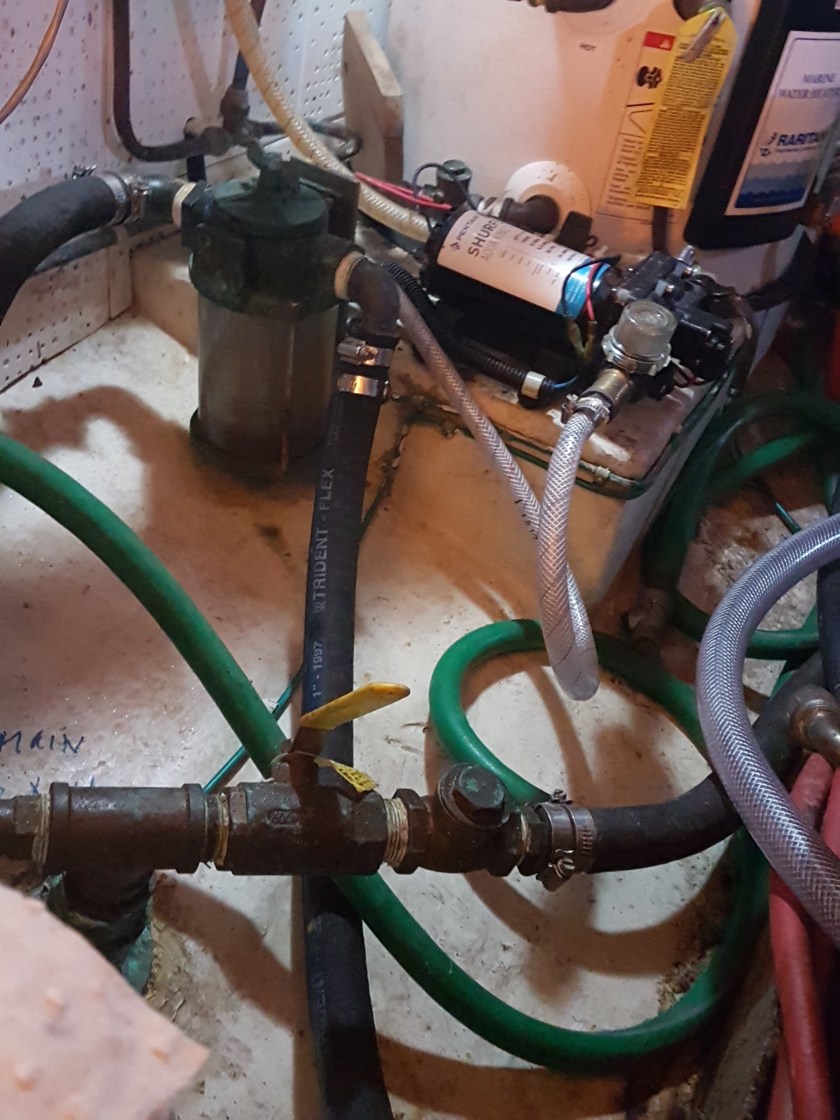
Then last week, my cool times came to an abrupt end. My aft AC stopped cooling and then started blowing hot air. That won’t work.The top of the AC strainer. The problem hose connection in the right.
The main engine strainer
Boat AC’s working using water pumped through the condenser to make cool air. (Home AC’s use air to cool the condenser).
So, when there is a problem, the first thing to check is water flow. And in fact, there was not any water flow or maybe just a dribble when it should be coming out like a water hose.
Easy fix I thought. It started well. I checked the sea strainer, which is exactly that, it strains sea water so that the water pump only gets water and not sea weed, sticks, fish and whatever got sucked into the thru hull opening. The strainer was full of crap and water was just dribbling out, when it should have been gushing out.
Oh, that was easy. But on a boat, the systems in place that makes everything run as they must, can become complicated.
I cleaned out the strainer. Put it back together and that started the last seven days of trial and error.
I hadn’t cleaned or opened the strainer in probably 4 years. It had a lot of corrosion around it. I brushed and cleaned it up as well as I could. Put it back together again, turned on the AC pump and all was well.
For about 10 minutes.
As of yesterday, the 6th day, I got the time up to two hours. It would run OK for two hours and then quit. I would need to let it rest about an hour and then do the process all over again.
Somewhere between the thru-hull and the AC water pump, air was being sucked into the system. The water pump is sucking so hard and it’s always easier to suck air than water. So even the smallest crack will allow air to be sucked in. That air then collects at the highest point in the system, at the aft AC unit, at which point the air blocks the water and the AC stops cooling.
That has been my last 7 days.
Every day I tried something new. I even made new gaskets from rubber sheets, I’ve did all sorts of things to try to fix the strainer. Sure, there has been some improvement, but it wasn’t fixed.
But I didn’t have a spare strainer. What to do?
One of my lessons learned from crossing oceans is there is always a solution.
When you are in the middle of the Atlantic, there’s no Boat US, no AAA, no nothing, only you and the odds and ends you happen to have.
I realized I did not have a spare sea strainer, but I did have two other sea strainers!
I could simply bypass the AC strainer and put a hose between one of the other strainers to the AC water pump. Then if there is still a problem, it would mean it’s the pump itself.
I’d decided to use the Generator strainer. The gen is not being used and won’t be until next summer. Also, should I mess that system up, it’s not a critical component, like the main engine.
The AC sea strainer uses 1” hose. Turns out the gen sea strainer uses ¾” hose. The gen doesn’t use much cooling water, but the AC’s use a lot.
The main engine sea strainer was 1” hose, so I decided to use that. That has enabled me to sit here a couple of hours later and write this piece in the cool comfort of the Kadey Krogen salon.
Which raises another even more important issue. The first rule of Ocean Crossing, Do No Harm. Don’t fix one problem by making another.
Only because Dauntless will spend the winter here in Huatulco, Mexico, would I consider messing with the main engine’s sea strainer.
There is always a lot of blather about single engine boats crossing oceans. Large commercial boats do it all the time, but then they are not affected by marketing.
If one looks at engine failures on single engine boats versus multi engine boats, the preponderance is a failure of one of the two engines on a multi engine boat. Why is that? On the face of it, the numbers should be exactly the same. Why aren’t they?
They are not the same because both consciously and unconsciously people take care of stuff better when they only have one versus two. Of anything.
How many times have you lost a key after having gotten extra keys made? How many times have you lost your only key?
If I was getting underway in the foreseeable future. I would never have touched the main engine’s sea strainer. Even though Dauntless is going to be here for the next 8 months, if my plan was to come back and get her ready to cross the Pacific, I would never have touched the sea strainer now.
Only because I have the luxury of knowing that: not only will I not be using the engine until next summer, even then we will be slowly moving up the coast. I have a few years and a few thousand miles of coastal cruising before setting across the North Pacific.
A boat is all about systems. A motor boat even more because it takes more complicated systems to run in a dependable manner. So, I am very careful not to mess with systems that don’t need it. Remeber, Do No Harm.
In opening up the AC sea strainer, I messed with that system. I upset something.
Turns out, in getting ready to bypass the AC strainer, I noticed the end of the outlet hose was very hard. Is it possible that when I opened the strainer, I broke the seal between this hose and the strainer nipple? Even though the two clamps were tight. (All connections to thru hulls have two clamps)
I decided before I did anything else, to cut 2″ off the end of that hose and re-attach it. I did and that solved the problem once and for all. Yesterday, the ACs worked for 12 hours with nary a problem.
So even with a solution in hand, keep trying to determine the real problem. Otherwise, it may come back to haunt you in the most inopportune time.
When I had the hydraulic hose failure in the middle of the Atlantic. I caused the problem because I turned the wheel knowing the rudder was already at its stop. Thus I did harm. This forced the fluid to go somewhere and it burst the hose at its weakest point. Luckily for me, that point was easy to find and relatively easy to replace.
But I will never do that again.
Here is the video of me replacing that hose. The seas were about 8 to 15 feet. We were stopped in the water like that for about 30 minutes, because I had to be careful not to make a small problem worse by breaking one of the fittings from the three-way coupling:
Error
This video doesn’t exist
I tried to get Micah who was holding the camera to get the overall picture and show the big waves that would approach Dauntless and then disappear under the boat. But that seemed to unnerve him. He wouldn’t look out. Oh well, it could have been worse.
So, one of my lessons learned in crossing the Atlantic: There is always an alternative, there is always a way, a bypass, a work around, but there is always a way. You just have to think about it.
I stayed two nights in the wonderful, quiet, still anchorage of Cedros & Jesusita. It gave me time to catch up on my
Sunset in Bahia Guacamaya on 23 July
sleep and to complete the chores, cleaning and re-organization I should have done before I left the dock in Golfito.
Not the first time I have managed to stress myself by not finishing things as I should in a timely manner.
Won’t be the last, but still …
I hated leaving but it was time to move on. I carefully followed by previous track out into open water. If I didn’t take any shortcuts in; I certainly don’t take them on the way out.
I was underway before 8:00, as I had contrary current to contend with, I kept the rpms a little higher, 1700 today than the usual 1500 to 1600. This gives me about an extra half knot, but also consumes an extra quarter gallon per hour or 17% more fuel.
Entering Bahia Samada at night of 22 JulyApproaching Bahia Guacamaya
I was headed to Bahia Samada. While it got good reviews on Active Captain, I’m starting to think all these reviews are written at a different time of year, with no south to west swell, because again it turned out to be rolly.
Also, buggy. I’ve gotten in the habit like most experienced “cruisers” to turn on generator as the sun sets. It’s at this point that the winds will decrease or die and the bugs come out. Also gives me an opportunity to put a little charge in the batteries, while running the A/C to cool and dehumidify the boat.
I usually run it a couple of hours, though I am conscious of the noise and it there are any other boats nearby, I turn it off sooner rather than later.
As I turned NE around the cape towards Samada, there was a large area of rain showers and thunderstorms, seemingly right over my intended destination. Though my timing worked out well in that the storms were moving slowly west, so while it rained for a while, by the time I got to the anchorage for the night, it at stopped.
As I said, not a great place to stop. Rolly and buggy (mostly gnats). Therefore, at the crack of dawn the next day, I was ready to get out of Dodge.
Hauled anchor at 06:00 and was underway to Bahia Guacamaya. This place also got great reviews and for once it deserved them. Hardly any roll, quiet, beautiful.
I stayed here two days. I got the water maker running again, cleaned up the stern deck and jury rigged my garden hose reel that I use for the stern anchor line. I did a good job, only wondering why I had not done it weeks earlier. Another unknown mystery of the universe.
But even before that. The trip was very nice. When I had left the winds were light from the northeast, forecast to turn southwesterly during the day at about 8 to 10 knots. As I rounded Cape Velas the winds were ESE at 20 knots gusting to 25. That pretty much was the rest of the afternoon. Very luckily, I was only a few miles off shore so the wind had very little fetch (the distance winds blow unencumbered over water) this kept the wave heights down, in fact they were less than 2 feet.
Dauntless was rolling on marginally. Now had I come here a few hours later, the seas would have been much greater. Just like the day I left Golfito, with the winds having blown all night, the seas were moderate by the time I left.
Also, I was able to check the latest forecast. I use WIndyty.com for the most part as I love how they present the data and the options you have to change what you look at. I pretty much only look at winds, though I may check the different weather forecast numerical models to see any significant differences. What was interesting about today was the forecast was very wrong, at least in terms of wind speed and for a small boat like Dauntless, that does make a significant difference.
I usually tell people, whether they ask or not, that weather forecasts are usually right, but when wrong they are usually wrong or time or location. What do I mean?
The forecast was for 8 to 10 knot winds out of the east. But 100 miles further north, the winds were forecast to be 20 knots. So, in this case the forecast was wrong by location. The timing was good.
Now since my Krogen on can go about 60 miles in 12 hours; 100 miles off on location makes all the difference in the world. But if I was in an airplane covering a much larger distance, the location being off becomes much less of an issue. Same thing if I’m a ship going 18 knots.
Now had I gotten up that morning with the winds blowing hard, I would not have left. Because the other aspect of bad weather forecasts is that they usually don’t get better. Meaning, if the forecast starts off incorrect, for any given time and place, it’s not like the weather will catch up. Sure, it may look like the forecast is spot on 12 hours later, but more likely, it’s just a matter of chance.
So, I got to Bahia Guacamaya and just as advertised the bluffs to the east blacked the winds from getting into the bay. Ver nice. One of the best anchorages yet, certainly the best if I include the scenery. So good in fact, I really regretted not have Trinh with me. This would have been such a wonderful spot to explore together.
Here are some videos of the two days:
21 July 18:15, Entering Bahia Samada at night.
Error
This video doesn’t exist
22 July Bahia Samada the following morning
Error
This video doesn’t exist
22 July 11:13 Underway to Bahia Guacamaya
Error
This video doesn’t exist
23 July Morning in Bahia Guacamaya
Error
This video doesn’t exist
Costa Rica Day 5 Summary: Engine Start 07:46, stop 18:50; uw 10 hrs 49 min, 67.7 nm, avg speed 6.3 kt. Average Roll while underway, +8° to -10°, delta of 18°;
Anchored Bahia Samada in 17 feet water with 100’ of chain out.
Costa Rica Day 6 & 7 Summary: Engine Start 06:00, stop 14:40; uw 8 hrs 30 min, 55.6 nm, avg speed 6.56 kt. Average Roll while underway, <5°either way, delta of 10°;
Anchored Bahia Guacamaya in 21 feet water with 80’ of chain out.
Thanks to the German band Trio for making a song that was right to the point. Just substitute the woman’s name for my port of call.
With women, at least both parties gain. With bureaucracies, it’s more of a matter of minimizing the pain. And there has been a lot of pain.
From the day, I left Martinique at the end of January to my arrival in Mexico, a few days ago, Customs, Immigration, Port Captains and the occasional Dog Catcher have been nothing short of a big PIA.
Mexico and Puerto Chiapas, Marina Chiapas, have been a breath of so very much needed fresh air. Yes, it’s still a bureaucracy, but guess what? Marina Chiapas makes sure you want to come back and never leave.
After taking literally three days and $160 in taxi rides to the airport twice just to check-out of Costa Rica at Playa Coco, we arrived in the late afternoon at Marina Chiapas after a difficult 4-day passage from Costa Rica.
We knew and expected the Mexican Navy inspection upon arrival, but instead were told, “Go to the restaurant before it closes; it the Navy comes while you are there we will come get you”.
That was music to our ears. So nice. So pleasant.
An hour and a half later, as we are walking back to Dauntless, the Navy shows up, about 6 people and a dog. They inspected the boat, looked at my papers, filled out some papers and were done in 15 minutes.
Very respectful and quiet. At check-out a few days later, I heard the gentlest of knocking on the gunnel. At first, I thought it was a bird. It was my check-out inspection. Again, courteous to the utmost. Never getting on or in the boat without being invited.
Now, this was not the check-in to the port and country, just the inspection, but the tone, courtesy and professionalism set the tone for the coming days.
Next morning, Rolf, the Asst. Manager of the marina took my boat documents and spent about an hour preparing the documents I’d need to check-in.
He then made copies of everything, including the 6 copies the Port Captain needed for each office (Immigration, Customs, etc.).
He, Cliff and I were then chauffeured around town to the various offices where everyone got some of the papers and stamped some other papers. Rolf did all the talking. We had to pay about $30 for our passport stamp and about $10 for something else.
That’s it.
I had not obtained my Temporary Import Permit (TIP). An official looking document that allows me to keep Dauntless in Mexico or return for 10 years. But no problem, I’d get it the next day.
The Marina arranged a driver to take me to the border of Guatemala and Mexico. Again, I did nothing, I just went along for the ride and at the appropriate moment showed my passport, that the official verified with the copy Rolf had made that morning. The office time 20 minutes, the drive each way, 45 minutes. My driver, who did all the talking and even got an unexpected copy of my driver’s license. We even went stopped by Wal-Mart on our way back. All that cost me $50.
Today I am in Marina Chahue in Huatulco. I took my papers to the marina office yesterday and 10 minutes later I was all done.
I am also thankful to Rolf at Marina Chiapas for pointing out that I could get a Zarpe to my final destination in Mexico, alleviating me of having to get a wed one at every port.
Let me in, Let me out. OK It is a bit monotonous, but then I had just gotten over an infatuation with a woman named Tala. Oh Tala.
I know I am skipping ahead here. Last you heard I was somewhere up a creek in Costa RIca.
Well, I will write about the trip to Mexico. It was a hard 4 days and 3 nights. Cliff joined me for the trip and that’s the only reason I kept my sanity.
Dauntless in Mexico
It was literally one of those trips where coming and going were all uphill.
But I wanted to pot this while it was hot on my mind. I got fuel today and changed the oil for the first time since Martinique.
Everything’s put away and tomorrow I tackle the T…. thing.
Here are a few pictures:
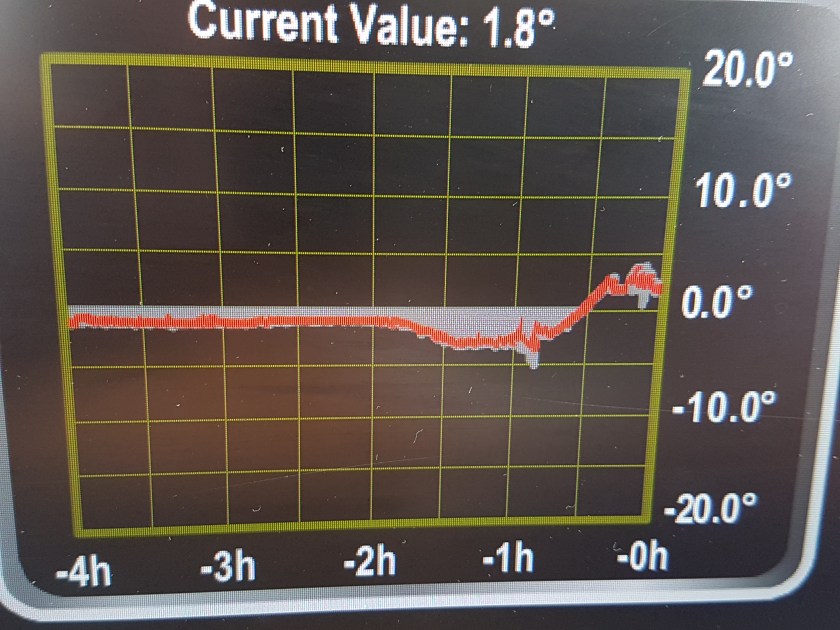
The Maretron data shows the list of the boat as I transferred about 150 gal of fuel to the port tank and then filling the starboard tank with about 300 gallons.
By the way, Mexico has been the best thing since Martinique. I think I will soon do a post of the best 10 places of 2017. Umm, there are only 2. Everyplace else will be on the bottom 50 list.
OK, the best 10 places of 2016 and 2017. I have at least a half dozen of those.
Transferring fuel from one tank to the otherThe data for the trip from Costa RIca. Look at the pitching (the graph on the lower left)



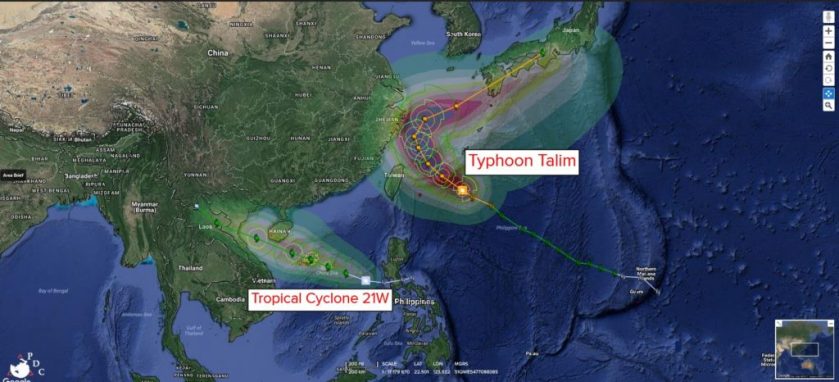 avoid the storm if at sea.





 Dauntless at Sea