The Dingy Fiasco part 2

As the winds finally let up after 10 days to let us get out of the tourist hell that is Cabo San Lucas, I was optimistic that having a functional dingy would give us increased stopping opportunities.

Our peaceful anchorage in spite of 25 knot winds

One of the key factors in deciding to burn money staying at the marina in Cabo for $100 per day was the lack of a serviceable dingy. Though, the reviews for anchoring outside the harbor, were mixed at best.

Leaving Cabo, the plan was to get a few days up the coast to wait out the next forecast period of strong northwesterly winds that preclude any movement north. Our goal was Magdalena Bay, a very large bay, similar to San Francisco Bay.

We had decided to bypass the anchorage off the Magdalena Bay entrance, as it did not look as protected as San Carlos, point another 12 miles north through a meandering, narrow channel. We were also looking forward to getting the taste of Cabo out of our systems be visiting a real Mexican town again.

Thus, the die was cast for Puerto San Lucas.
the channel to Puerto San Lucas in Magdalena Bay

As we were passing the anchorage, heading up channel, we heard a call on the VHF, weak, but readable, in Spanish, telling us something. Again, my Spanish stinks, so I wasn’t sure what was being said, but I guessed it was about Puerto San Lucas and we’d figure it out when we got there. I’d already made the decision that the anchorage at Magdalena Bay was too open for my likes.

12 miles and two hours later, as we approached Puerto San Lucas, we got the call again. This time, it was loud and clear that the port was closed due to the anticipated high winds. I suspected that, so we told them we were going to head a couple miles further north to anchor in the lee of the mangroves. That was met with happy approval, since it was clear in the tone of the conversation, that the port captain didn’t like telling us the port was closed to us.

We proceeded north another few miles which put us right on the edge of the charted area of both the C-Map and Navionics charts. Going very slowly as the water shallowed, at one point, I did let us get out of the channel and had to rapidly reverse to avert the 17th grounding of my career (but who’s counting?)

Video of us approaching out anchorage 

Error
This video doesn’t exist

Still shot of us approaching anchorage
Dauntless at anchor, north of P San Lucas

Anchored in about 10 feet of water, with 100 feet of chain and snubber for the anticipated winds, we were quite content. The winds were already 15 to 20, gusting to the high 20’s, but with no fetch, the seas were very small, less than half a foot, and Dauntless was rock steady.

We did swing around overnight due to the current, but my 55-pound Delta anchor has never dragged since I got it 4 years ago. I don’t even bother with an anchor alarm anymore, but I admit that’s because I have given up on Drag Queen probably because it turns itself off due to poor reception in my cabin and more importantly, I don’t anchor off lee shores.

Having sleep like a baby, the previous two nights having been spent underway, we woke up full of piss and vinegar. Time to take the dingy to Puerto San Lucas and check out the action, well more like, check out the food.

Now, not being totally stupid, I decided to go upwind for a bit to see how well the dingy and its puny 5 hp outboard could handle the conditions. As you can see from the video, all looked great, though the winds were blowing 20 to 25 knots.

The view from the dingy on our reconnaissance lap

Did I do the math? No. Puerto San Lucas was about 2.5 to 3 miles away; downwind.

But we set off with the winds to our back, the only concern was where we could land the dingy. Not knowing that location was mistake number #1.

Mistake #2 was I have two handheld VHF radios. The primary one, the ICOM, battery could no longer charge, so that was on the list of things to replace. The secondary one, the Chinese whatever, would take real rocket scientist to figure out how to use, thus it was relegated to some storage container someplace where I put things I don’t feel like dealing with.

Video of our test lap 

Error
This video doesn’t exist

Besides, why would we possibly need a radio.

Twenty minutes later, zipping right along, maybe a half mile upwind of town, wondering where we could land the dingy. We see a man cast fishing, standing in about 1 to 2 feet of water maybe a few hundred feet from shore. Let’s head there.

As we get closer, we finally realize we are running of water. Umm, those rocks look so close. I reach to unlatch the outboard, so it can tilt upwards and as I fiddle with the lever, ge-clunk, the prop hits a rock or two and we are in half a foot of water.

We get out the oars, yes, I remembered to take them, only to realize we are hard aground, as the wind continues to push us towards shore.

I jump out, to get us turned around, Larry starts to row. Some minutes later, we are in deeper water, enough to start the outboard.

Rule #1, when running aground, follow the same route out as you followed in. Mistake #3, not following Rule #1. We were further to the west than our track in.

Getting the outboard started we decided to head back to Dauntless. The outboard had a bad vibration; I’d bent the prop. That, the 25 knot headwinds with the now 1 to 2-foot seas it produced, along with a heavier dingy and two people, meant that our downwind speed of probably 5 to 6 knots, was now about 2 knots.

Every minute we would be splashed by a breaking wave. We couldn’t see Dauntless at all. I knew where she was, but clearly, we were more than 2 miles away. That meant, we had an hour of this.

That’s when we went aground again. This time coupled with a belching of very black motor oil, like the Exxon Valdez had passed through. I thought I had totaled the outboard, as in the prop hitting a solid object was enough to break a connecting rod inside the motor.

But the motor started up and we seemed to crawl northwards. I didn’t know where the oil (about a cup worth) had come from, but I expected the motor to quit at any moment. The winds and seas were too strong to row again. Even with the outboard still running, we were doing at best 2 knots.

We discussed contingency plans.

We decided to head north until the boat came into sight and hope the motor lasted long enough. I kept on asking Larry if he thought we were making any progress. That guy fishing was still quite visible, while Dauntless was no where to be seen. This went on for the next 30 minutes, until it was obvious that we were making progress. Though I wondered for how long. The outboard was clearly on its last legs, shaking itself to death with no oil.

We decided that if the outboard quit, we would have to head west to the shore, about 1 mile away. We could not go upwind, but if we angled across the wind, we should be able to make shore. At that point, we would get out and walk along the shore in deep enough water to drag the dingy north. Once NW of Dauntless, we would row to her.

We were cold and wet, but having a plan that was at least feasible, made me feel slightly better. Though I was feeling miserable that I was subjecting Larry to this fiasco. That was making me feel worse. When I’m alone and fuck up, I deal with it. But I hate for others to suffer because of my actions. This is why I like being alone many times. I don’t feel stressed nor responsible for anyone else. If I torture myself, so be it, I deserved it.

The Kadey Krogen came into sight after about 40 minutes since we stared heading back. She blended well into the background. The outboard sounded worse than ever. I pictured it quitting within feel of Dauntless. With these winds and waves, no way could we have rowed to her. Even if we were 100 feet away, we would probably have to row to shore, a half mile away, and do our drag up the coast to get upwind of her.

I crossed my fingers and toes.

About this time, we saw a panga heading south. But it was about a half mile to our east and by the time we saw it, it was well south of us. Had I seen it earlier, I would have waved it down. He could have towed us to Dauntless in 10 minutes. But it wasn’t to be. I was reminded how stupid it was, especially under such conditions, to venture forth without a radio.

For 30 minutes we watched Dauntless get bigger and bigger. I prayed to Poseidon, Circe and whoever would listen to just get there. Finally, as I bumped into the swim platform and Larry grabbed ahold, I breathed a sigh of relief. We’d made it.

Getting the dingy rigged to the winch line, I decided to see if the outboard would start. No, it was done. I was grateful it kept on going that last hour.

I’ve written before about the “having two keys”. There have been countless times when I have lost a key but had duplicates someplace. Whereas I can never remember having lost a key when it was my only one.  I wondered if I was more careless than usual because I knew I had another outboard in the future? My friend Mike had promised to give me his spare 15 hp outboard when I got to Southern California.

One never knows, but everything is connected, even when you think it isn’t.

The following day, leaving for Magdalena Bay anchorage, to give us a better head start the next day.

Error
This video doesn’t exist


The Dingy Fiasco part 1

It’s hard to believe that I have 5+ years and 20,000+ miles under my belt. I don’t.

Why, you wonder?

Oh, the routine things, those daily tasks or almost daily takes, are easy. It was in Germany when I lost my bow thruster. That was at the beginning of our 2015 Baltic Adventure. Seems like ages ago.

So, I’m pretty good at back and filling now. I can turn Dauntless around in a 180° in two boat lengths or 85 feet. It also gives me the excuse to Just Say No. When a marina, like recently at Dana Point, gave me a slip that I thought that I may be able to get in, but never get out again, I was able to easily say no, without guilt.

They found an end “T” dock for me.

I can also change the Racor fuel filters and prime them in less than two minutes. But now, I have the wisdom that I don’t need to rush. That’s the advantage of having the two dual Racor filters in parallel. Also, by only feeding from one fuel tank at a time, it a problem or issue develops, I immediately change the tank feed and filter and then diagnose the problem. This came in handy a couple of weeks ago when I sensed a change in engine pitch.  I immediately asked Larry to take the helm, while I went to the engine room. Sitting on the stringer in front of the engine, I could tell the rpms were not steady, but slowly rising and falling.

That meant a fuel or air problem.

The Racor bowl looked good, but I immediately changed to the other Racor. No change. I switched fuel tanks. The surging continued and got a bit worse.  But now I thought I understood the issue. I talk Larry to increase the throttle. After a moment’s hesitation, the engine started running smoothly and normally again.

What was the problem?  I’d run the fuel tank empty!

But I didn’t kill the engine because I acted immediately by changing both the filter (that at that point, probably had some air in it) and the tank. The Ford Lehman can be a PIA if you run it totally out of fuel, but I do have an auxiliary electric pump which I use just to prime the Racors and the engine mounted filters if need be. It works great, within seconds, system is pressurized and no more f…ing with that lift pump on a hot engine.

But the dingy, why that’s another matter. In 2016 we only used it a few times. Sitting in Cabo San Lucas with nothing to do, waiting for the head winds to die down, I figured I may as well make one last attempt to get the dingy going.

I spent an hour in the hot Cabo sun pumping it full of air. I’d already used another tube of 5200 to seal the back transom to the pontoons. The dingy looked pretty good. No need for a new stink’in dingy. I had looked at the local Costco the day before but saw no sign of any. (My observational powers leave a lot to be desired).

My inflatable, inflated. Looked pretty good.

Then in yet another moment of inexperience, I decided to lower the dingy to the dock, without checking the outboard.

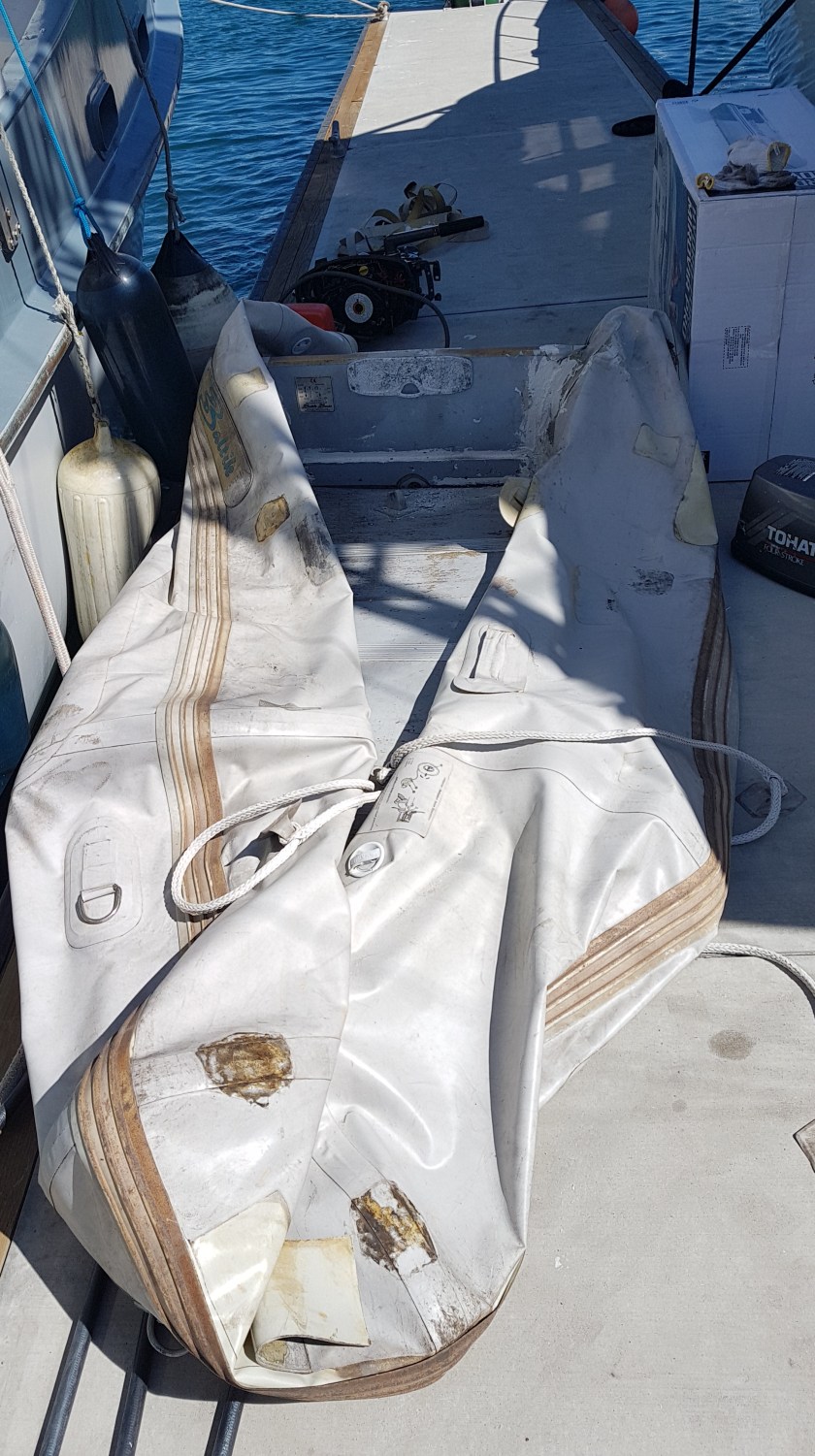
I was feeling pretty good until the next morning. That sad picture tells the tale.

I decided that we could survive without the dingy. And in hindsight, we would’ve, could’ve, should’ve done without one.

Returning to Costco to stock up on required supplies like Danishes for yet another attempt to head north, I spotted the dingy that had eluded me the last TWO visits. They had it displayed standing vertically, on it’s tail. Of course, I couldn’t see it like that. They may as well have hung it from the ceiling.  But remember, that this point, I had decided to go without. How was I going to get it to the boat in any case, so, I just bought my Danishes

Walking out of the store, I noticed these guys, presumably taxi drivers, and with my 20-word Spanish vocabulary, I never found out, but they did point me back to the store and I understood that Costco delivered.

When businesses make it easy to spend money, I’m all in. In 10 minutes, I had my dingy bought and they would deliver the next day.
The Next Day

Another hour of foot pumping, my new dingy was good to go. Now, to get the outboard working. Of course, after The First and Nearly the Last almost a year of non-use, it was a no-go.

The New Dingy

I realized I had to clean the ports in the carburetor again. No biggie, except in my inexperience, I had not done this while the outboard was on the boat or even on the dock. It was now sitting on the transom of the new dingy. I debated trying to take the carb apart while hanging off the end of the boat., but realized it was a sure way to lose a critical part. My back would have to pay the price for my brain not thinking about this before.

Another hour later, I finally was good to go and thought it would be good to take the dingy down to the fuel dock and fill up the gas can.

All went as planned and I was left with a confidence that I did not deserve.

The video of the first and nearly the last dingy trip

Error
This video doesn’t exist


Keys:


Anchoring at Night in Strange Places; It’s not for the Faint Hearted.

Only day’s away from completing this 2,000-mile, two-month journey, I found myself breaking yet another of my hard and fast rules I made for myself 5 years ago.  Entering yet another harbor at night, and having to anchor by radar, avoiding darkened, moored boats and mooring balls.

But like most hard and fast rules, I had to weigh the circumstances against various risks. In this case, anchoring at night was the least risky option. I’d left Channel Island Harbor at 04:00 for the 120 nm voyage to San Luis Obispo harbor. I’d planned on 19 hours. Thus, to arrive before sunset, would require me to leave the Channel Islands at midnight.

Leaving anyplace at midnight means a total disruption of my sleep cycle. I’d be starting a long trip tired and already behind my personal power curve. By leaving at 04:00, I’d be able to get a reasonable 6 hours sleep and 03:00 is on my natural wake up curve (though normally, I’d go back to sleep for another 3 hours).

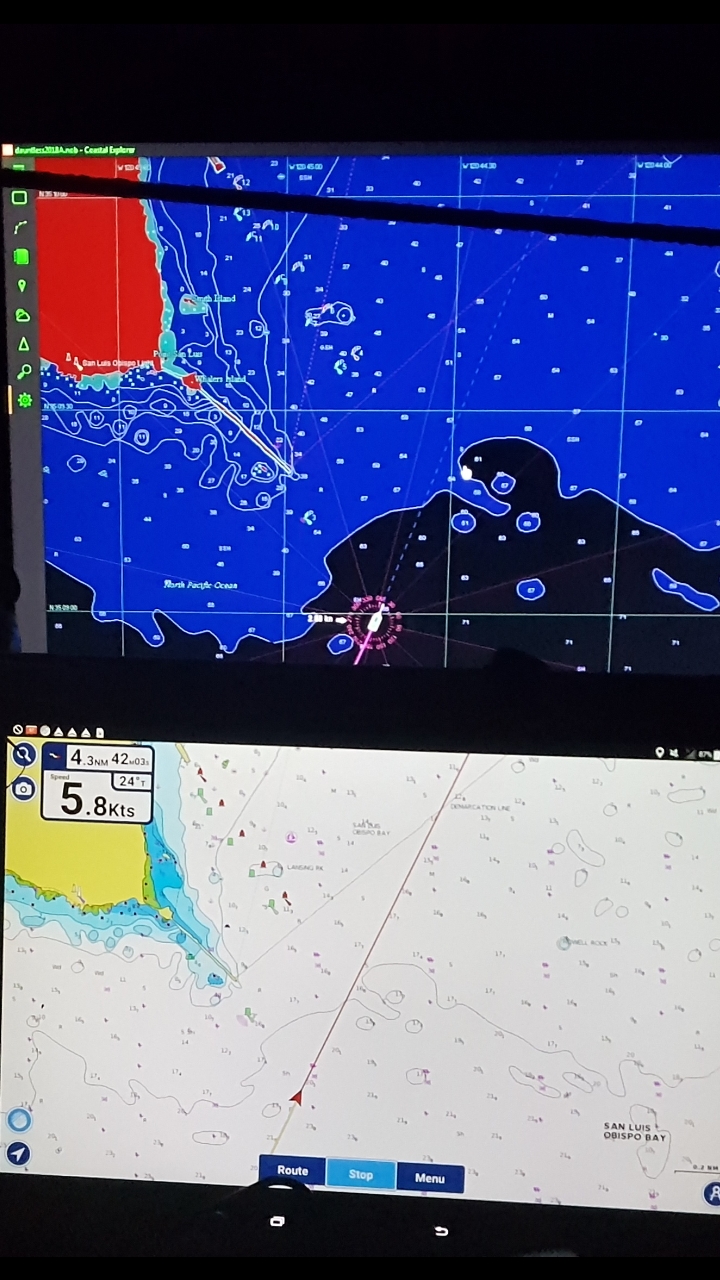
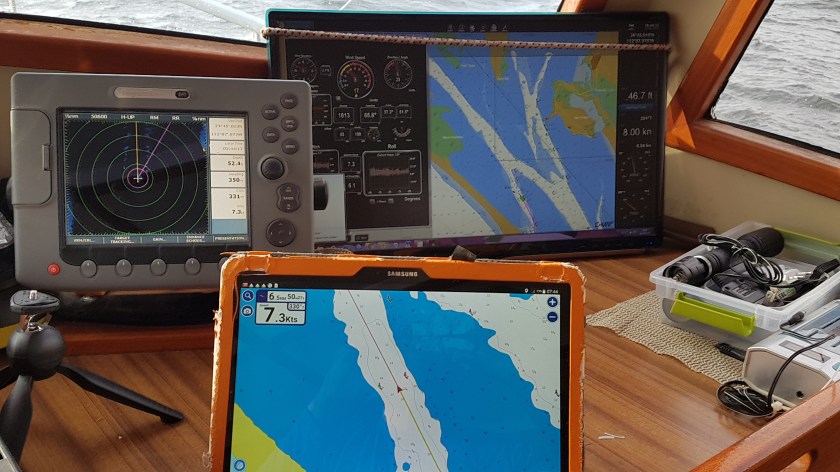
Raymarine E-80 Radar, C-Map on Coastal Explorer, Navionics chart on Samsung Tablet


Therefore, anchoring in a strange harbor at night seemed for me to be the lessor of two evils.

Let’s talk some basics. Four years ago, I hated my Raymarine E-80 Radar. I felt (and still do) that it was 1980’s technology, dressed to look like the 21st century. It was on my lest to replace at the earliest opportunity when money allowed. I had wanted a radar that I could integrate into my Coastal Explorer and C-Map chart plotter, navigation program.

San Luis Obispo harbor

Using the “Auto” settings, the E-80 will show you if the Exxon Valdez is bearing down on you, but otherwise, it either filters too much or not enough to be useful for close in maneuvering. As the miles and time increased under my belt, I learned how to best fine tune the radar using the manual settings for gain and sea state (which is basically a filter) to make it an effective tool.

Whenever I start the engine, I also turn on the: radar, navigation lights, auto pilot, VHF radios and horn.

Always.

For the first lesson in using the radar is that you must use it when the visibility is ideal, to be able to effectively and safely use it when the visibility is impaired, whether due to darkness or weather conditions (mainly fog, rain is another issue).

While underway I’m constantly checking and identifying any radar contacts visually, as well as on the navigation charts (for navigation markers, buoys, etc.).

As soon as I spot something the radar does not see, I adjust the radar, fine tuning so to speak. Normally this is just a matter of adjusting the sea state setting, though sometimes I also must fine tune the gain. E.g. I may see a fishing skiff a half mile off my starboard quarter, but it’s not showing up on the radar. I’ll have to lower the sea state setting, maybe only a few points, until the skiff shows up, but not the countless wave tops around it.  Sometimes, I’ll have to adjust the gain also.

My goal is always for the radar to show me potential hazards, without showing me wave tops. For the last couple of years, my tuning technique has been good enough to do exactly that. Forget the “auto” settings, they are hopeless.

Since I don’t get many false alarms, this also allows me to maximize the use of the two zone monitors.  For coastal cruising, like I’ve done since entering the Pacific Ocean, I set up a ring at ½ mile, that’s an 1/8 of a mile thick. Thus, if anything enters that ring you get an alarm. If you just put a circle around your boat at ½ mile, the radar will see some clutter very close to the boat and thus render the alarm, ineffective at best and annoying at worse. I make this ring go about 220° to 300° around the boat. That way it will see something approaching from the stern quarters, but not directly behind, as the radar will occasionally see a reflection of the mast, again making it ineffectual.

The second zone I set up 1 to 1.5 miles from the boat, in a much more 20° arc.

On the open ocean, well away from land, I’ll basically double these distances.

If I do get any false alarms, I adjust again. Usually it happens as the sea state gets worse (bigger seas).

For my set up, I find values of both the gain and the sea state in the 70’s to work best. In flat seas, I can lower the sea state to just above 50, but again, even changes of 1 or 2 can make a significant difference.

On this night, entering San Luis Obispo (SLO), as the seas calmed as I entered the bay that is protected from the NW through the East, I readjusted the sea state, lowering the filter values. From my charts I knew there was a mooring field, presumably with some moored boats. I adjusted the E-80 so that it would pick up objects as small as the mooring balls. Had the seas been above 2 to 3 feet, this would have been an impossibility, but if I had such seas in the harbor, I wouldn’t be stopping in any case.

This night, with strong NW winds, the harbor was well sheltered and the seas where maybe half a foot or less. Under those conditions the radar will do well.

I open and secure both pilot house doors, so that I can have quick access to looking out. I also go to the bow to scan the approach with binoculars (7×35), which I find very effective a night in poor light conditions.

Thus, I have that visual picture in my head, while checking the radar to ensure it’s seeing the same things.  Again, because I am constantly doing this in the daytime in good visibility, I have the confidence to know what the radar is telling me at night, when I must trust

Here is a short video of  it of me getting ready to enter the harbor:

Error
This video doesn’t exist

Here are some stills made 2 minutes before the above video:

The radar 2 min before I took video
Coastal Explorer using C-Maps above, Navionics on tablet below

Three years ago, going through the main shipping channels of the Kattegat to the Skagerrak over the top of Denmark, I was terrified by what my brain perceived as the massive ship about to crush Dauntless. I was outside the channel, marked m red buoy, I knew the ship had to stay in the channel. The radar told me the buoy and this massive ship were ¼ mile distant, but my brain, every time I looked at the ship, I could swear was less than 50 feet away.

My mind was so convinced this ship was towering over us, that even as I checked and rechecked the positions of the markers on the chart and the ship and marker on the radar, all showed the target as more than a quarter mile away, but my mind would just not accept it.

I only calmed down when the ship was past.  In the daytime, my mind would not have been fooled, but at night, the perspective of distance, becomes very difficult.

I realized then that if I was going to continue to travel at night and not die of a heart attack, I had to make sure I knew exactly what the radar was telling and what it wasn’t and once done, accept what it showed.

So, this night, almost midnight, as I pulled into SLO bay, the radar guided me to a large area with a diameter of about half a mile with no mooring balls, though there were a couple of boats anchored on the west edge.

No fuss; no muss,

I was anchored in 25 feet of water at 23:20 having done 120 nm in 19 hours and 30 minutes, at an average speed of 6.2 knots.

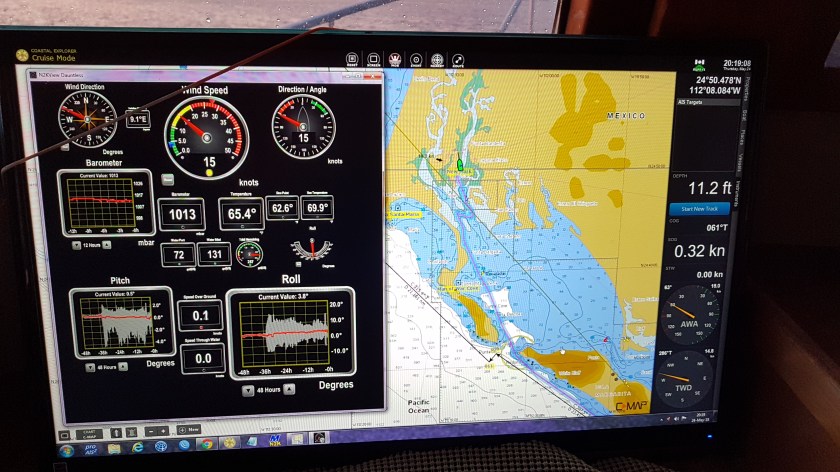
The trip from CI Hbr to SLO. The Maretron data for pitching and rolling shows I did a fair amount after I rounded the corner to head north.

The morning after:

Error
This video doesn’t exist


Third Time is the Charm, I Hope

Dauntless is ready to go.

As of Tuesday evening,  we are planning to try to get to Magdalena Bay, 130nm, tomorrow. Our third try in the last 9 days.

Error
This video doesn’t exist

Though even at that, we will probably we stuck there for three days over the weekend, as another period of very strong (15 to 25 kts) winds is forecast to hit the area then.  But it’s time for new, less touristy scenery.

We’ll leave mid morning, as the winds diminish mid morning to late afternoon.
We had a few issues to deal with in the last few days, the most serious, a worn rubber “O” ring on the autopilot hydraulic pump.
With a new ring and a few hours of getting the air out of the system, we are good to go and better than before.
My Maretron weather instrument was off line due to a failed “T” connector.  After a couple hours hanging on the mast for dear life, that too has been fixed.

Lastly,  on my third trip to Costco in as many days,  the dingy finally appeared in front of my eyes.  On sale for only $500 delivered,  it was too good a deal to pass up.  Took me all afternoon to blow it up,  and then a day to fix the carb that was pouring gas all over the place,  but finally as i drove it to the fuel dock to fill the gas can,  I felt pretty good.

The New Dingy
So tomorrow we leave Dauntless in as good a shape as she has been in a long time.
Our weather window is not as open as I’d like,  but we simply must pound out the next 200 miles to get into better,  more favorable winds. Once north of Tortuga Bay,  life is better.
We’ll check out of Mexico in Ensenada and check in to USA in San Diego.

It’s then to my friend’s Mike and Adriana in the Oxnard area, hopefully by mid June.

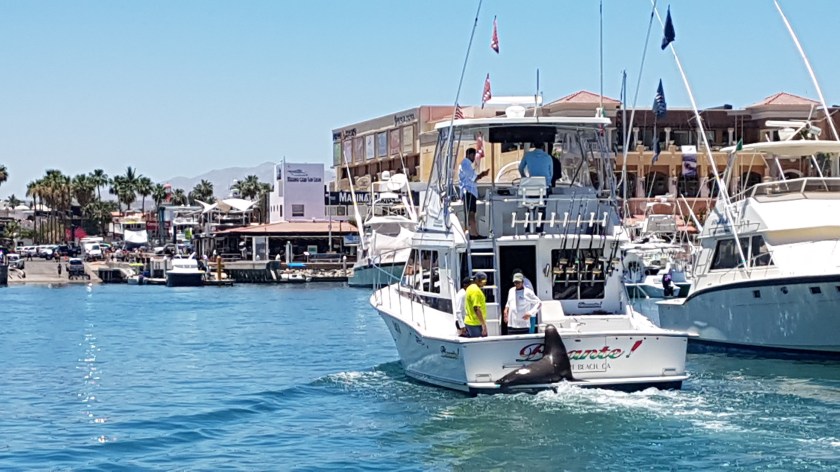
Pancho, the 12-year old Sea Lion of Cabo San Lucas

Stay tuned

Pancho again, takes lift, waiting for a free fish.

Laptop Dead as a Doornail

My HP Envy Laptop died a few weeks ago. Add poor internet connections, so I have no been able to even write about the trials and tribulations of the last 4 weeks.

As yo can see at Share.Delore.com/Dauntless I’m still in Cabo, but am planning on leaving Sunday morning before noon.

But then I tried to leave last Sunday also, but Mother Nature turned me back and made me see the error of my ways.

I’m hoping she’s in a better mood tomorrow. If not may have to start sacrificing goats or pigs or something.


Some More Foods of Vietnam

Trinh is checking out the rice a the local supermarket by smelling each handful. Smelled like rice to me. Of course, she doesn’t buy it here, because it costs 12 cents a more than the local outdoor market or rice store.
Hot Pot at our “new” Hot Pot Place
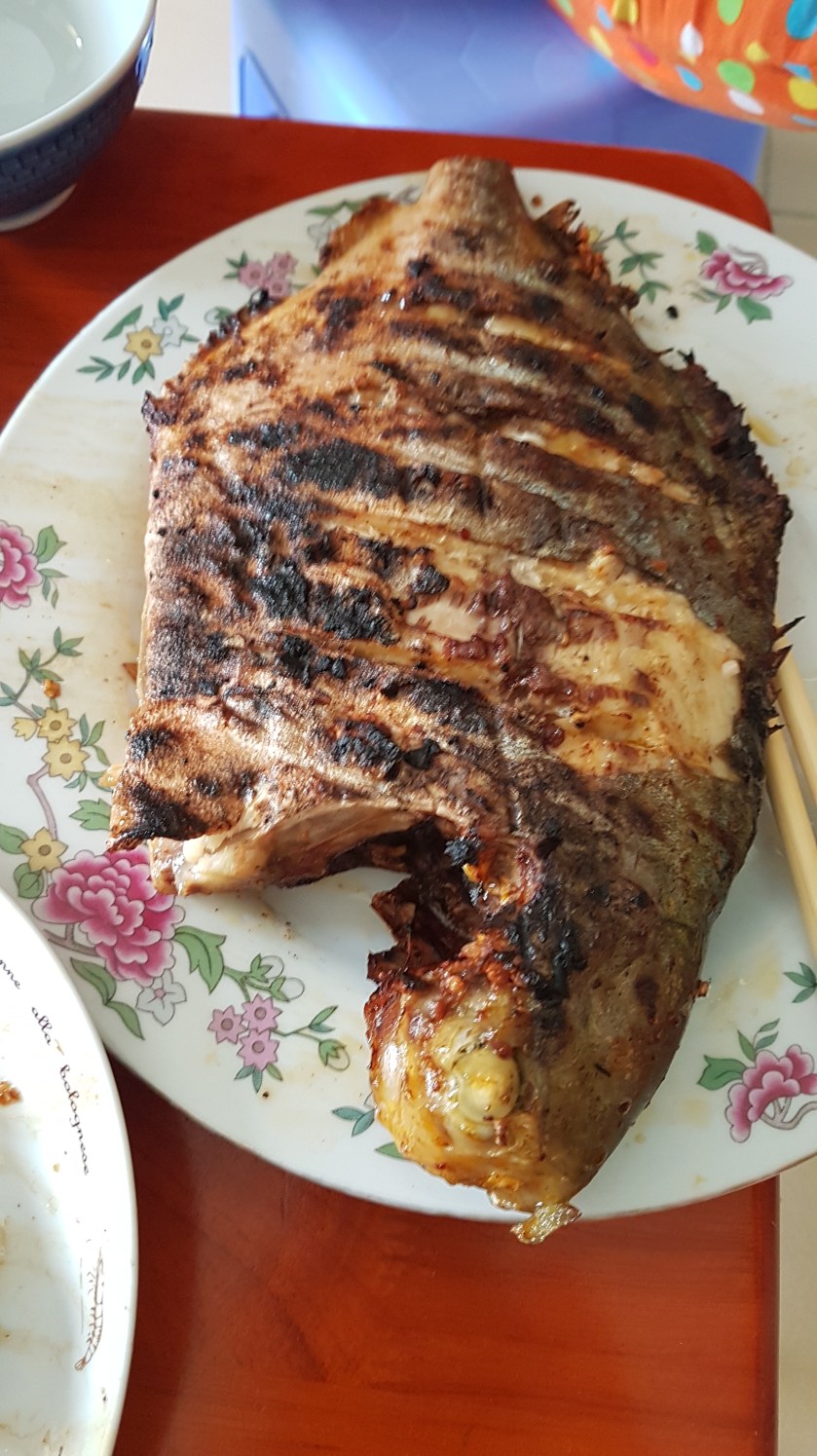
Grilled fish (sea fish) at home
A Pho place in our neighborhood
A seafood salad at home
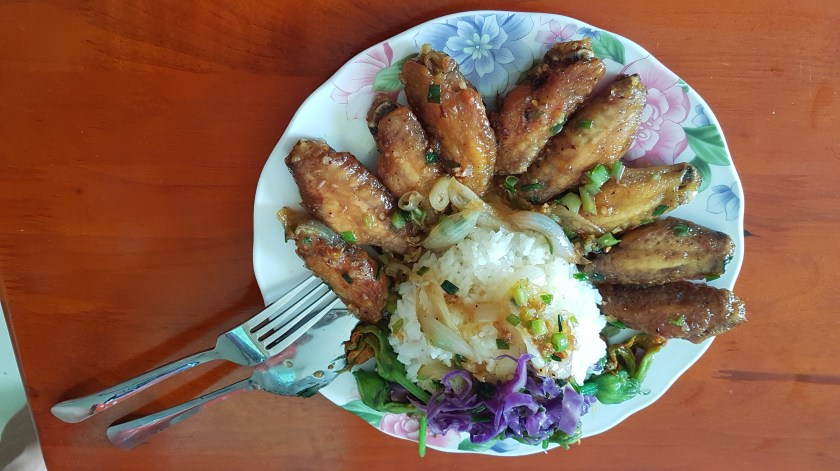
Chicken wings with rice and rot kohl at home
Chicken wings with vegetable and rice at homEvery

Here is a week of food I’ve had. Now, of course, in any category, it’s some of the best I’ve ever eaten.


Enjoy

Plans and Goals

One needs to have a good plan to accomplish the goal, but sometimes, life happens, plans change and maybe the goal too.

The rub is, it’s even easier to change the goal, then to make a better plan for the circumstances.

But changing goals is a slippery slope; so easy to do, but before you know it, you’ve accomplished nothing.

In 8th grade I decided I wanted to be a meteorologist. Seven years later, in my last year at the University of Washington, I hated school, I was bored and tired of not having any money. But unlike many of my college friends who dropped out, transferred or just disappeared, I persevered.

I had a goal to accomplish. Three Master’s degrees later, each one to further some career goal, I look back and am satisfied with the goals, though some of the plans to accomplish those goals should have been re-thought.

Dauntless has been in my life for 5 years now. Inexplicitly, it doesn’t seem that long at all to me at all, it still feels like yesterday or at least last year.

The goal to take a boat to Europe and then S. Korea is even older, maybe 9 years. That goal drove the search for the right boat. A boat that could not only cross oceans but do it in a manner that I could afford on my meager pension.

The original plan was to cross the North Pacific this coming summer and arrive in Yeosu, S. Korea by October 2018. Instead, I find myself agonizing over how to get up the Pacific coast of Mexico. The North Pacific seems further away than ever.

But the goal doesn’t change; though the plan must.

I now have some intrepid fellows helping me with the first and hardest, part of the cruise north. Having good crew can put a lot of wind in your sails. It also allows me further tweak the plan. Maybe I can get to San Francisco Bay sooner, rather than later.  Then, I would be able to spend some of this summer and fall cruising with good weather and friends.

So maybe some baby steps are in order for the next few years, but the destination remains the same.


Everything is Swell

In one of my recent posts I talked about my use of Windy.com and how much I like the GUI they have developed. It’s an easy way to look at the two-main worldwide weather forecasting numerical models, the GFS and the ECMWF.

The mid-Atlantic on 11 March 2018 as depicted on Windy.com

Almost a year ago today, I wrote the post “The Atlantic is a Harsh Mistress”.  This was my first reaction to the reality of what we experienced versus the anticipation of what I expected.

I had read so many accounts of boats crossing oceans.  Not having any experience, myself I was not sensitive to the subtle differences of the trade wind Pacific versus the Atlantic.

Hey, it’s the trade winds, characterized by strong steady winds and large, 15 to 30-foot-long period waves.

Easy Peasey, as Micah was fond of saying.

I’d just read an account of Kadey Krogen 42 doing the much longer passage from the California to the South Pacific and Australia. Their only problem was boredom and they ran out of Coca Cola. I wouldn’t have those issues.  Having lived in Europe on and off for years, I’d long ago learned it best to wean myself off American products.  And boredom, not when I had countless hours of Korean Dramas and a crew mate in Micah, who also liked them as much as I.

I still vividly remember leaving Heiro, the western most island in the Canaries to small seas and steady winds. After the first hour, I found myself thinking this could be an easy three weeks. An hour later, as the seas and winds increased, I deployed one paravane stabilizer, another hour later, I deployed the second. We stayed in that configuration for the next three weeks.

It was anything but easy. The passage was characterized by three wave sets (swells).

Swell are longer period waves that develop when the wind blows over the ocean for long period of time. Thus, winds and storms, hundreds or thousands of miles away cause swell.

The primary wave set or swell was from the east, the second from the northeast and the third from the southeast. The third had the longest period (time between waves) of ?15+ seconds. The other two, were on the order of 9 to 12 seconds.

On top of this all, were the wind driven waves. These waves are created by the wind at that location and if the wind stops the waves stop also. These waves had a period of about 7 seconds.

The result of all this was that we had 12 to 15-foot waves from the east, right behind us. My Kadey Krogen loves following seas, but what made it so difficult was the other two swells with different periods hat produced a corkscrew movement. Then every 8 minutes or so, the NE and SE wave troughs would meet under the stern of Dauntless and we would do this wild corkscrew movement with first the bow pointing to heaven and then seconds later, twisting down.

It was a wonderful corkscrew if I was on a roller coaster.

Here are some videos of the experience:


Error
This video doesn’t exist

I love my boat so much.

Error
This video doesn’t exist
 
Error
This video doesn’t exist
Error
This video doesn’t exist

In the middle of the Atlantic,15 December 2016. The Kadey Krogen flag is now in tatters.

So that was my introduction to multiple swells. Oh, I had noticed it before in the north Atlantic, but I attributed to “rogue” waves and it was not so systematic as in the trade winds.

The result was best described by some sailors I met in Martinique who had just done the same crossing. They called it the bathtub, because the water was so disorganized.

Getting back to Windy.com, if you open the page, https://www.windy.com/21.576/-45.264/waves?waves,19.746,-41.594,5

On the far right, you can see the vertical column where “waves, swell, swell2 and swell3” can be chosen.

Looking at this data today, mid-March, it’s also apparent why the best time to cross this part of the Atlantic is in early winter, as the when we crossed in December, at least all the winds and waves had an easterly component. Now, you can see that there is a swell from the northwest, that must be very unpleasant.


Vietnam & Americans

I’ve hesitated writing this post for months.

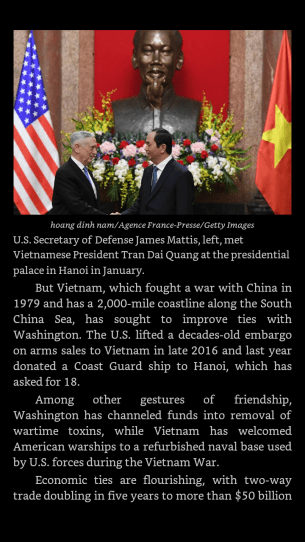
From the WSJ

Why?

Because I know how sensitive this subject can be for Americans of my generation. I didn’t want to offend or disrespect anyone.

Disrespectful to the American veteran who was put into a shitty situation thru no fault of their own and told to fix it, without the tools to do so. Disrespectful to those who lost life and loved ones. Disrespectful to those Vietnamese, who if they survived the war years, then had 20 years of a very hard life or if lucky enough, were able to flee with only the clothes on their backs.

So, what changed? Living on and off here for the past year, I see people, no matter what their background who are truly appreciate of Americans, like Americans and just want to work hard.

I’m watching Anthony Bourdain: Parts Unknown – Hanoi. Find it someplace and you can see in pictures and sound what I am trying to explain poorly.

I just got back from two weeks in the country for the Tet holiday.  Upcountry as some could say, in Quang Nam province, just southwest of Danang.  Simply put, Tet is about remembering the dead and living. Country living here is like living in the countryside in Europe 30 years ago or the USA 50 years ago.  Yes, that means we have electricity and cold running water, but everything else may be luxury.

Former ARVN (left) & VC are now the best of freinds. (He had just showed me the scar of the hole in his leg when he was shot by VC) We then both looked at her and everyone laughed. (it was a bit surrealistic for me).
The memorial to the father of Trinh sister’s husband. KIA during Tet 1968 while fighting with/for the Americans.

I was overwhelmed with the warmth of the people: friends, neighbors and family of Trinh’s mother and family. They would lend us motorcycles to get around. I was invited to every neighbor’s party. Everyone had to come by and drink with me.  I drank a lot of beer and my new-found drink, rượu nếp, which is much like Korean makgeolli (막걸리, but a bit less effervescent.

I think Dauntless needs eyes

Now, cruising here with Dauntless is another story. A complicated story for another time.

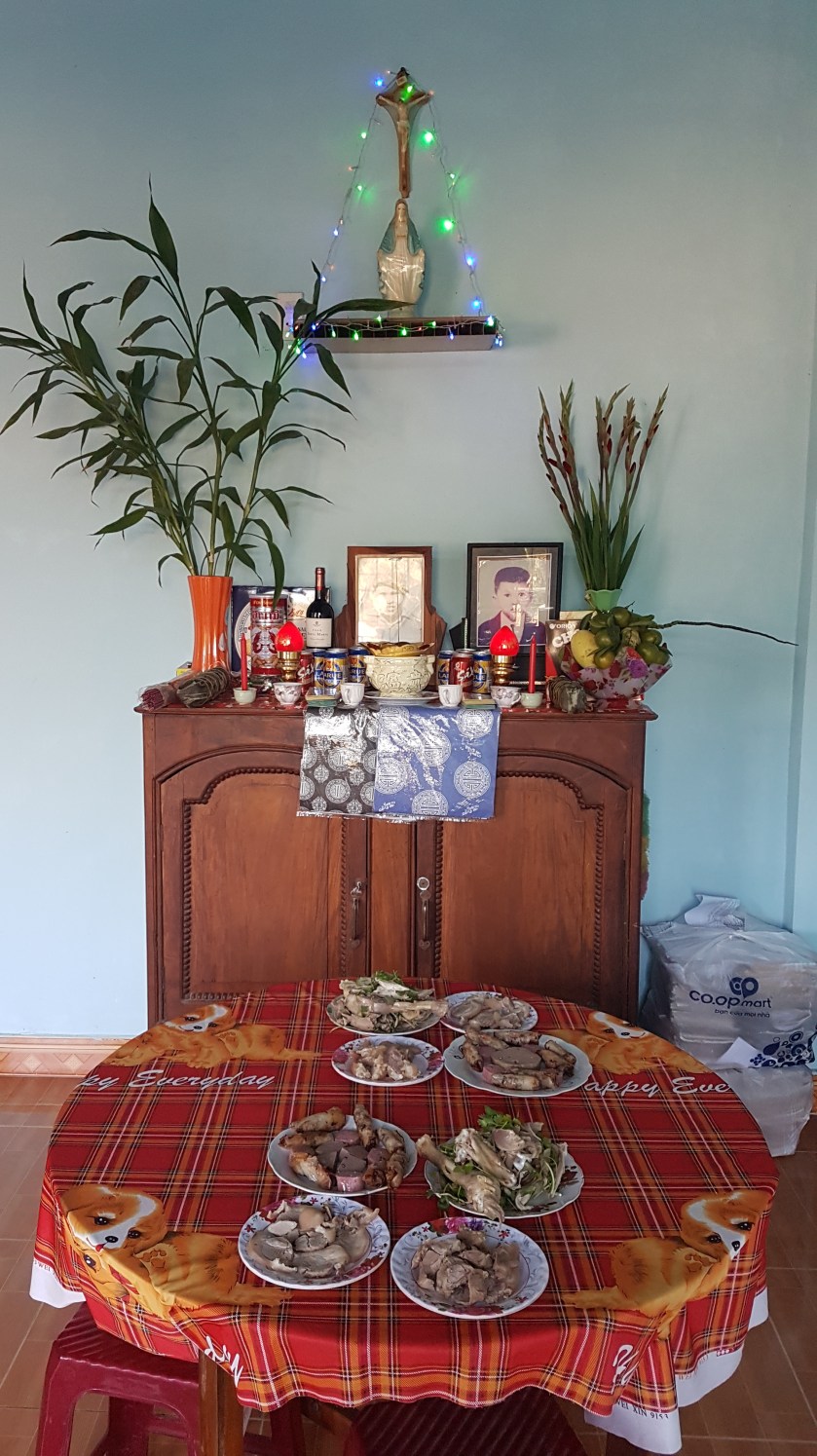
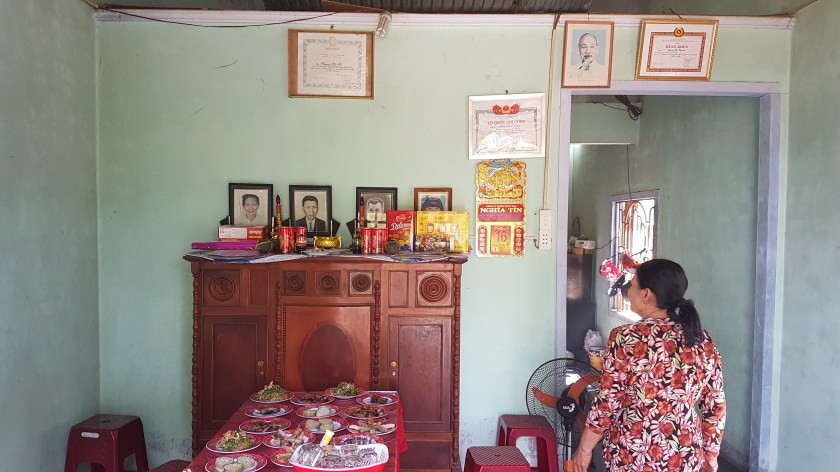
Trihn’s mother’s house and memorial dinner

The Plan Comes Together

So, after the two-week (for me) Tet Holiday, life is returning to normal. I was in the “country”. It wasn’t that conducive to writing blogs.

But I ate so well and the people are so incredible nice, former VC or not! It was both overwhelming and amazing, but this is a story for another time.

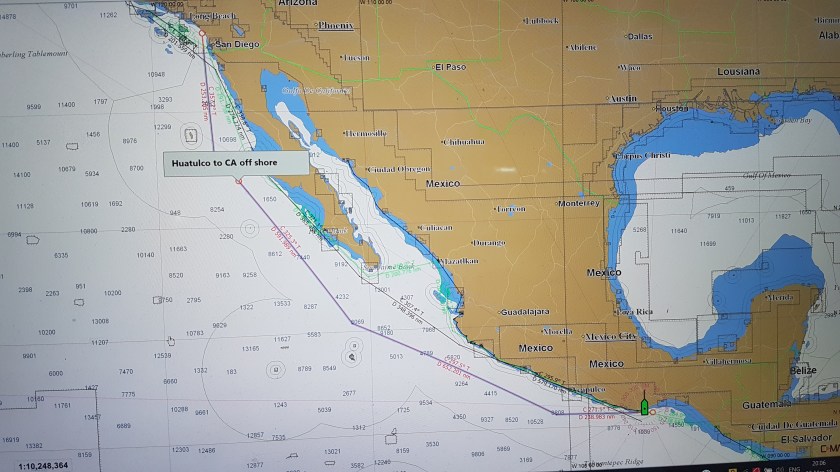
I think I finally have a plan to get Dauntless up the west coast, that I am comfortable with. Sometimes it seems like the plan comes together immediately, sometimes it takes a lot of time. The reality is that every plan takes a long time to gestate. Plans seem to come together immediately only when I’ve been thinking about them forever before putting pen to paper. However, in this case, I feel like I’ve been writing continuous plans since September, just to move Dauntless the 2200 miles to southern California.

25-Feb-18   2018 Option C  
07-May-18 Huatulco 0.0  Alloc 0 0  Running nm legs Hours in transit
12-May-18 P Roquita Island/Acapulco 1.8       5 49 5 245      245
15-May-18 P Zihuatenjo 0.8       3 37 3 110      110         355     355 61
18-May-18 P Caleta de Campos 0.6       3 27 3 80        80
20-May-18 P Cabeza Negra N 0.5       2 33 2 65        65
27-May-18 P Manzanillo 0.4       7 9 7 60        60         560     205 35
02-Jun-18 P PV 1.6       6 38 6 230      230
08-Jun-18 P Mazatlan or Cabo San Lucas 1.4       6 33 6 200      200         990     430 74
20-Jun-18 P Cabo San Lucas 312 1.6     12 18 12 220      220      1,210     220 38
02-Sep-18 P Cabo San Lucas 312 0     74 0 74 0        –
12-Sep-18 P Turtle Bay 320 3     10 42 10 420      420      1,630     420 72
20-Sep-18 P Baja Calif Ensenada 340 2       8 38 8 300      300      1,930     300 51
26-Sep-18 P S.B. Channel Islands (SD +50) 310 2       6 47 6 280      280      2,210     280 48
13-Oct-18 P SF Bay 333 2     17 18 17 300      300      2,510     300 51

This assumes that the winds and seas are favorable only 25% of the time. E.g. it requires 74 hours (3 days) from  Manzanillo to Mazatlan, so I allocate at least 12 days to get there. Now, we understand that those 25% of times of favorable winds could take place in almost any combination. One day in four is the least likely, due to the nature of the synoptic weather pattern needed to disrupt the usual northwesterly winds. It’s more likely to be in chunks of 4 days out of 3 weeks or 6 days out of 5 weeks.

This means that I must have something I am not known for, patience. Even the word makes me cringe.

And even if I have a planned stop in XXX, as long as the winds stay nice, I need to keep moving north.

The intermediate places like Acapulco, etc. are possible stops if the weather turns unfavorable or whatever.

First goal is to get Dauntless to Baja California, preferably Cabo San Lucas or perhaps Ensenada, by mid-June. The fallback plan is to get at least to Mazatlán.  I have a wedding in Salt Lake City June 23rd that I’d really want to attend, however getting Dauntless north safely has to be my primary goal.

Once there, I’ll leave Dauntless for the two months in summer.

I need to re-arrange my affairs a bit and see some friends, so I’ll travel to Alaska, Seattle, San Francisco and Texas.

I also need to scout some possible locations in California for Dauntless for the winter 2018-2019. Cost and security are the primary considerations. If you have any ideas or suggestions, please email me directly. I’d appreciate the input.

I’ll then return to Vietnam for two months. I’ve accepted the fact that Trinh will not have a visa for anyplace this coming summer, so I’ll be working on 2019.

Retuning in September, I’ll spend 6 weeks getting her (Dauntless, not Trinh) to her winter haven in California.

This plan offers me safety in that I like traveling a bit off shore (as opposed to near coastal) and making the 2500 nm trip into chunks of miles and time that are doable, even if I have to do some parts alone.

I’d prefer to have some crew/help, 2 people, a couple, would be ideal, 1 or 3 would be good.

Tet – It’s Not Only a Holiday; It’s an Adventure

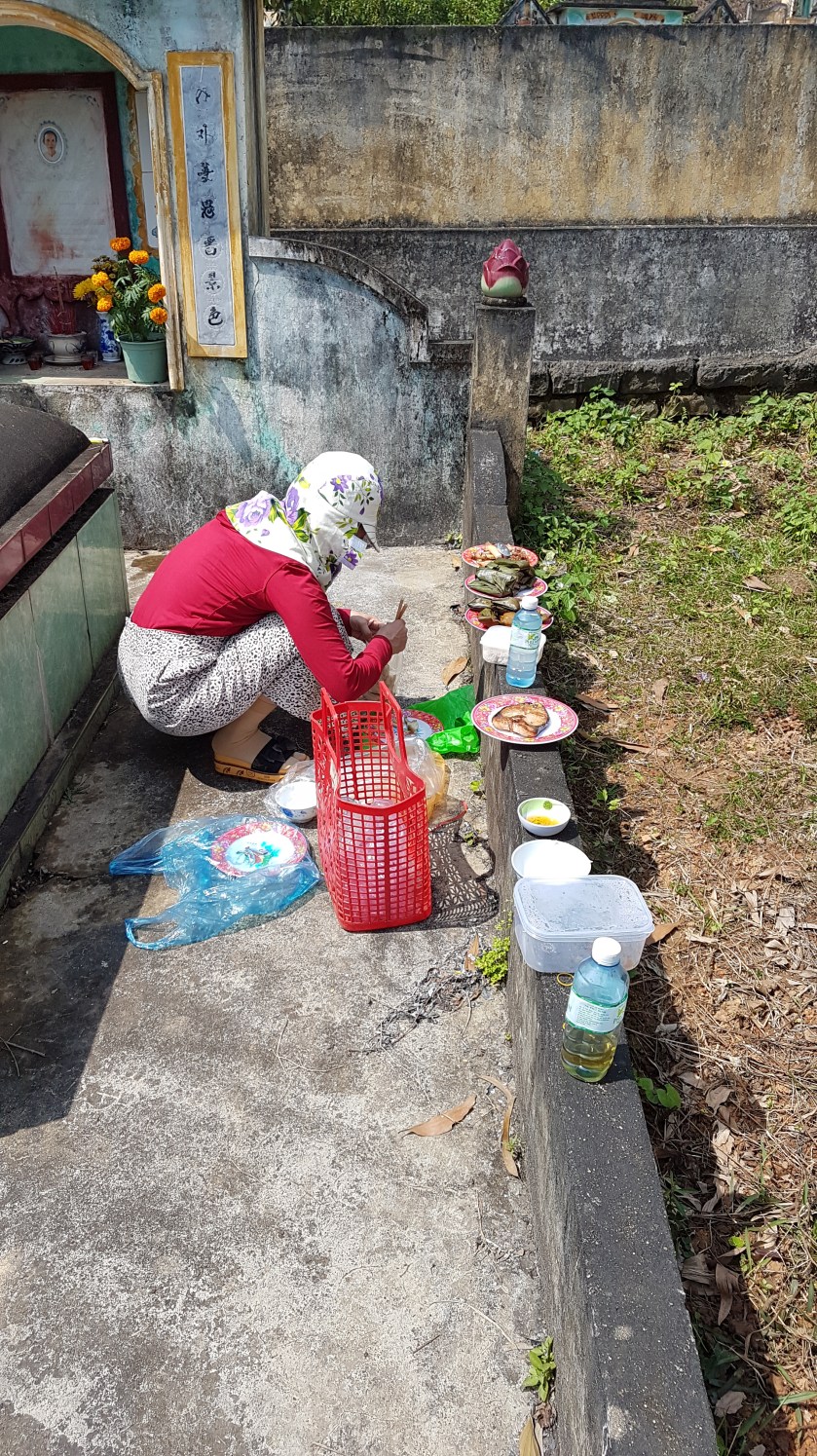
Yesterday as I was watching my girlfriend Trinh prepare the food at her grandmother’s grave, I realized how much my perspective has changed since crossing the Atlantic.

Food laid out at her grandmother’s grave

I accept a level of uncertainly, magnitudes above, what I would have been comfortable with even 10 years ago.

The cemetery is about 20 minutes from Trinh’s mother’s house, where we are staying these days of the Tet holiday. Trinh and her mother had been cooking all morning. Finally, they meticulously packed a large bad hat would sit between my legs in front of me on the motorbike.

We set off. I had been to the gravesite two days previously, so I thought I knew what was going to happen.  Upon arrival, I see the box of cookies we had left the previous visit. Obviously, her grandmother hadn’t eaten any. Yes, I was being flippant.

Incense was still burning; Trinh mentioned that her step-brother, must have just been here. I never knew she had a step brother, but what the hell, I’ve only known her for little more than a year!

Trinh proceeded to unpack the bag, which contained not only food, but plates, utensils, clothes and even money. When you’re dead who knows when you may need extra cash.

In spite of my flippancy, I really like, respect the Asian reverence for the dead and elderly. It was one of the differences (in my mind) between western and Asian cultures and a reason I became so attracted to first Korean and now Vietnamese culture.

After 15 minutes, Trinh was putting the final touches on the dinner. I watched as she meticulously spooned a little fish sauce seasoning on the two main plates, a tuna steak and a plate of sautéed squid. Looked so good, I thought it a shame to waste.  Knowing the Vietnamese don’t waste anything, I was surprised.

She poured little glasses of wine and water, giving the old water to the potted plants, and refilling the glasses with fresh water.

When everything was done, she lit the incense and did her little prayer ritual.

Then, just as I was thinking we were ready to leave, she started to undo all the work of the last 15 minutes by putting all the food back in the containers it had come it. Nothing wasted, even the little sauce, went back into its’ little bag.

(two short videos of her getting it ready, then putting it back)

Error
This video doesn’t exist
Error
This video doesn’t exist
Putting it all back

Surprised? Not really, more like bemused. After my first Atlantic crossing, I learned to not be surprised at anything. I also learned to not complain about anything. When I dared complain about the 12-foot waves, they became 18 feet.

Mother Nature taught me as only she can: Be grateful for what you have, because it can always be worse.

Oh, I can still be as miserable as I want or as the situation dictates, I just can’t express how bad it is. Can’t even think it, for who knows who is reading your thoughts nowadays.

Those three storms, each a day apart, in the North Atlantic in the last week of August 2014, re-forged my brain.

New Yorkers grow up in a culture of excellence. That’s because we complain about anything that isn’t top notch, price notwithstanding. As teacher, then principal, I took that attitude with me. I did what was best for the students and built the teachers into a successful team. I complained to the powers to be about policies and procedures that were not conducive to student learning. I was listened to. While we had a reform minded Chancellor, that was very effective; but as soon as that Chancellor left, the reactionaries returned and I was out within 6 months. My only crime was my naivety that results (graduation rate from 40% to 70% in 4 years) would speak for themselves.

Food, money, wine, water, clothes and of course money (in USD of course)

Dauntless was the crucible that helped me through that abrupt change in life.

Three years later, on the North Atlantic, heading to Ireland, this was the forge. I would become accepting of what is or else. Now, this doesn’t mean I accept just anything. More than ever it simply means that if I’m not happy with a place or situation, I need to not be there or accept that I can’t change it.

Thirty minutes after arrival at her grandmother’s grave, now, really ready to leave, I still had to ask, with a little smile on my face, but what happens if she is still hungry? Trinh answered deadpan, “she ate”.

That was that. I knew what we were having for dinner and it was quite tasty, though the tuna was a bit drier than normal!

The North Atlantic taught me not to complain; to accept. The North Atlantic opened me to the possibility to be in an Asian culture in which even when I think I understand, I don’t.

I watch, observe, but don’t judge. I assume I don’t understand the full situation at any given time. I keep my questions simple, where do you want me, when?

I never ask why. Like waves on the ocean, it is, what it is, could be better, could be worse. If you don’t like it, go somewhere else, but don’t try to change it.

Tet – It’s Not a Holiday, It’s an Adventure

Yesterday as I was watching my girlfriend Trinh prepare the food at her grandmother’s grave, I realized how much my perspective has changed since crossing the Atlantic.

Food laid out at her grandmother’s grave

I accept a level of uncertainly, magnitudes above, what I would have been comfortable with even 10 years ago.

The cemetery is about 20 minutes from Trinh’s mother’s house, where we are staying these days of the Tet holiday. Trinh and her mother had been cooking all morning. Finally, they meticulously packed a large bad hat would sit between my legs in front of me on the motorbike.

We set off. I had been to the gravesite two days previously, so I thought I knew what was going to happen.  Upon arrival, I see the box of cookies we had left the previous visit. Obviously, her grandmother hadn’t eaten any. Yes, I was being flippant.

Incense was still burning; Trinh mentioned that her step-brother, must have just been here. I never knew she had a step brother, but what the hell, I’ve only known her for little more than a year!

Trinh proceeded to unpack the bag, which contained not only food, but plates, utensils, clothes and even money. When you’re dead who knows when you may need extra cash.

In spite of my flippancy, I really like, respect the Asian reverence for the dead and elderly. It was one of the differences (in my mind) between western and Asian cultures and a reason I became so attracted to first Korean and now Vietnamese culture.

After 15 minutes, Trinh was putting the final touches on the dinner. I watched as she meticulously spooned a little fish sauce seasoning on the two main plates, a tuna steak and a plate of sautéed squid. Looked so good, I thought it a shame to waste.  Knowing the Vietnamese don’t waste anything, I was surprised.

She poured little glasses of wine and water, giving the old water to the potted plants, and refilling the glasses with fresh water.

When everything was done, she lit the incense and did her little prayer ritual.

Then, just as I was thinking we were ready to leave, she started to undo all the work of the last 15 minutes by putting all the food back in the containers it had come it. Nothing wasted, even the little sauce, went back into its’ little bag.

(two short videos of her getting it ready, then putting it back)

Error
This video doesn’t exist
Error
This video doesn’t exist
Putting it all back

Surprised? Not really, more like bemused. After my first Atlantic crossing, I learned to not be surprised at anything. I also learned to not complain about anything. When I dared complain about the 12-foot waves, they became 18 feet.

Mother Nature taught me as only she can: Be grateful for what you have, because it can always be worse.

Oh, I can still be as miserable as I want or as the situation dictates, I just can’t express how bad it is. Can’t even think it, for who knows who is reading your thoughts nowadays.

Those three storms, each a day apart, in the North Atlantic in the last week of August 2014, re-forged my brain.

New Yorkers grow up in a culture of excellence. That’s because we complain about anything that isn’t top notch, price notwithstanding. As teacher, then principal, I took that attitude with me. I did what was best for the students and built the teachers into a successful team. I complained to the powers to be about policies and procedures that were not conducive to student learning. I was listened to. While we had a reform minded Chancellor, that was very effective; but as soon as that Chancellor left, the reactionaries returned and I was out within 6 months. My only crime was my naivety that results (graduation rate from 40% to 70% in 4 years) would speak for themselves.

Food, money, wine, water, clothes and of course money (in USD of course)

Dauntless was the crucible that helped me through that abrupt change in life.

Three years later, on the North Atlantic, heading to Ireland, this was the forge. I would become accepting of what is or else. Now, this doesn’t mean I accept just anything. More than ever it simply means that if I’m not happy with a place or situation, I need to not be there or accept that I can’t change it.

Thirty minutes after arrival at her grandmother’s grave, now, really ready to leave, I still had to ask, with a little smile on my face, but what happens if she is still hungry? Trinh answered deadpan, “she ate”.

That was that. I knew what we were having for dinner and it was quite tasty, though the tuna was a bit drier than normal!

The North Atlantic taught me not to complain; to accept. The North Atlantic opened me to the possibility to be in an Asian culture in which even when I think I understand, I don’t.

I watch, observe, but don’t judge. I assume I don’t understand the full situation at any given time. I keep my questions simple, where do you want me, when?

I never ask why. Like waves on the ocean, it is, what it is, could be better, could be worse. If you don’t like it, go somewhere else, but don’t try to change it.