Listening to the pitter patter of rain against the windows brings a warm, comfortable feeling to my entire being; or perhaps it’s just the Soju I’m drinking.
Probably both. A night like this demands a few glasses of good wine or a green bottle of Chamisul, a Korean soju, the original of course, now called “classic”. Maybe old guys like me would rather be called classic than original.
Now, it’s getting dark at 4:00 p.m. Europe changed from Daylight Savings Time this past weekend. They call it Summer Time by the way.
But I like these dark, windy, rain swept days. The only thing better is snow. Why else would I have lived in Alaska for so long? It certainly wasn’t for the baked goods!
No, these cozy times call for a drink to warm your innards, sit and think. Think about where we have been and where we are going.
A Rock in Norway covered with red leaf vines
Once again I find myself plotting the general route for this spring and summer, but then the mouse has a mind of its own, and keeps on plotting waypoints. Before long, the summer becomes the fall and then the winter trade winds take over and swoosh the mouse goes marking a path in seconds that will take a year to do.
I tell myself it’s too much. I need to stop and smell the roses; all is well and good it is; until it strikes.
What strikes you may ask? If I get struck with a case of wanderlust that can only be cured by listening to the sea as Dauntless cuts thru the waves. The gentle hiss; the curl of the water making an endless pipeline wave, calls you to jump right in and feel what the dolphins feel.
We did 4400 nm this summer, a little more than 1000 miles per month. A hard pace. But I knew it was pushing it when I planned it and all in all, I got back to Waterford within a day of the plan I had made in April, 6 months earlier. Would I do it again? Of course I would if the same situation presented itself; A chance to explore beautiful lands off the beaten track. Meet wonderful new friends. Get even closer to old friends. One can not ask for much more than that.
So, just for “shits and grins” a favorite USAF saying, I laid out a 16 month, 14,000 mile trip. Honestly, I keep hoping the miles had somehow gotten less. Doesn’t everyone nowadays talk about how the world is shrinking? Seemingly not on Dauntless. The route stays pretty much he same every time I look at it.
I do pore over the Jimmy Cornell book, “World Cruising Routes” hoping to find the tiny wormhole that will transport us from the Canaries to Northwest Asia in a blink of an eye. At least that’s how long it took in Deep Space Nine.
But the people I’ve met along the way call to me like the Sirens of Odysseus. No wonder it took him 10 years to get home.
Evidently this is the reward for being patient and getting the things done yesterday that needed to be done:
Complete bus heater installation
Dauntless Travels over Flat seas while Richard makes his first and last selfie
Replace port side Racor fuel filter
Replace both engine fuel filters
Open the starboard tank, yet again and clean out
Change the starboard tank vent line
By 18:00 hours all was done. The fuel tank opening was necessitated by once again having some water in the starboard tank. Which led to only the second engine shutdown and the first one in over two years?
Opening the inspection port, which I hate doing, was necessitated by my not having moved the fuel vent previously after cleaning the tank. Just plain lazy on my part, and I paid the price by now having to do double the work.
The newly installed Bus Heater under the stairs
The tank turned out to be in not bad shape, only about 1 quart of water, along with about a pint of black sludge. When I was done, I put about 30 gallons back in the tank so it would not sit totally empty and start rusting, again.
On removing the hose for the fuel vent from the fitting, there were some drops of greenish liquid on both the fitting and the hose. Since I’ve been suing green tinted fuel, I thought it was that, but I figured I better taste it to find out.
It was sea water, sweet and salty. Almost refreshing.
Yep, the smoking gun was revealed. That helped me feel better and justified moving of the vent once and for all.
So today, Wednesday, Plan A, its 190 nm to Norway, that will take 30 hours, 10 hours per day for three days, putting me into Kristiansand, Norway Friday evening.
Wanting to take advantage of the light winds I got up early, cast off and was underway before 07:00.
The next time I must open the fuel tank, I will get a helper
The day has only gotten nicer. The winds are even less than earlier, now down to 6 knots, with flat seas, or at least as flat as we ever see. Dauntless is motoring at its most efficient engine rpms of 1500 getting 6.1 knots.
This means a little better than 4 nm/gal (6.1nm*hr-1/1.5gal* hr-1)
We both could not be happier.
Also, I am reminded how much I love being on the water when I am not being tossed around like in a washing machine.
Plan A: motor 12 hours today, anchor for 12, then do it twice more, so on the last day, Friday, head WNW from the northern tip of Denmark to Norway; is being modified into Plan B. The forecast calls for light winds today, then tomorrow continued light from the east, but getting stronger Thursday and Friday.
And while the forecast winds for Friday are going to be stronger, 15 to 20 knots, with seas building to 4 feet, since it is from the east and I would be going just north of west, it would be following sea and the KK loves following seas.
But I think I will hedge my bets. I’d rather not take the chance on Friday’s winds. If they are off even by just 40° it will make the trip much more miserable.
Coastal Explorer AIS depiction of the ships off Anholt Island, everyone is heading for the same point to head north. The dashed lines in front of each ship represent the distance the ship will do int he next 6 minutes.
Mid-afternoon, I am coming upon the marker just to the east of Anholt island and it seems everyone has the same thought. I have seen a lot of ships today, far more than I saw while in the English Channel.
And now we all seem to be chased to the same spot. the problem is these behemoths are so much bigger, like a fly compared to an eagle and they are usually going twice my speed.
It’s going to be a long night.
It’s 19:45 hrs. Evening depiction of the AIS tracks. Alongside the Maretron environmental info
And I’m posting a number of writings at once for who knows when I will have internet again after tomorrow,
Day 4 out of Stockholm, 31 August 2015, Grey skies, flat sea
Darkening clouds building into thunderstorms
I awoke in the little cove of Rödskär to grey skies and flat seas. While the skies were much like yesterday morning, the seas were not. The wind had turned around to the north overnight, but was very light, just a few knots.
I have decided to take advantage of these great motoring conditions. Last night, I was getting tired following the meandering channel in the skärgärd with treacherous rocks ready to make one mistake an expensive one.
So I had spent the last hour a few miles off shore, in the wind and waves, though the wind had died down to 12 knots and the waves were only 2-3 feet, but bow on.
But as you shall soon see, bow on winds and seas are always more trouble than its worth. But I’m getting ahead of myself.
The cove I found turned out to be perfect. No waves at all, so I put out 100 feet of chain and had a very quiet night with hardly any movement at all. When I awoke, the boat had turned to the north and after I had hauled the anchor, I then decided to finish making my cup of coffee and to plan the day’s route.
Dauntless just sat were she was, so I figured maybe today I need to take advantage of these ideal motoring conditions and keep going due south on the outside of the skärgärd area.
The Track at Anchor This was a good night
We’ll see how it goes.
We did how it went; not well. After 60 years I am starting to see a pattern in what I do.
As you just read, the day was going very well, though the winds starting picking up as the afternoon progressed. Nothing unusual in that, everything else being equal, winds increase as the day gets warmer.
But the more I motored south, not only were the winds getting stronger, but there was an uncomfortable swell seemingly produced by the waves diffracted around the south tip of Öland island.
I decided to prepare the paravanes for action, but I was hoping not to use them since we had been carrying a good speed and the birds in the water would slow us by 0.7 knots.
I was still hoping to make the dash of 90 miles south to Ustka, Poland, but had already decided that if I needed to use the paravanes, the trip would not only become slower, but also harder and thus, no point.
I did alter my course to 180°, instead of the SSE I had been on for a direct line to Ustka.
Less than an hour later, the winds had increased to 20 knots, the seas were building yet again, I threw the birds in the water and altered course to WSW, a direct line to the east channel entrance to Karlsrona. Now, I did check the charts and saw that a better nighttime entrance was one hour further to the SW, but I figured how bad can it be? Also, I just wanted to get out of these waves. I had started about 6 this morning and it was not past 20:00 I was tired.
My 6 and a half hour 15 mile trip
So to answer my observation about the pattern I see, when things are going easily, I push the envelope, maybe go longer, and take the riskier entrance.
Simply put, the easier things are, I seem to have the need to challenge myself. That is the only explanation why I get myself in the yet another perilous night time entry to a channel that I have never seen before and even knowing that the markers are NOT lit.
It was a nail biting hour just to get to the spot I thought it would be safe to anchor for the night in about 12 feet of water.
My driving lights saved the day or I should say night. Without them, I could not have done it. The markers were not only not lite; the channel was very narrow, maybe only one fat boat width. But it turned out this worked in my favor because the driving light lens got broken by a fishing boat in Castletownbare. Thus the light pattern was not as uniform s it should be. So I was having to point the bow in the direction I thought the next marker was. But the channel was so narrow, I only had seconds before I was out of the channel and the navy program starts yelling;” pull up, pull up”
OK that’s the wrong warning, but you get the idea, I only had moments to find the marker and get on stay on course.
So that where the narrow channel helped. Had the channel been wider, it would have been harder for me to see the next marker. This was made even harder because it’s only been literally days since its gotten real dark. I became accustomed to the dusk where you could see something in the distance. This was dark. I saw lights for some small towns, and that’s it.
And the markers did not even have reflective tape on them.
The Lights I will be Adding
Well. I finally got to the point I could turn off into deeper water to anchor. I did and was very grateful.
Day 5 1st September
I got up relatively late, 08:00 and was quite pleased how well the night went. In spite of strong easterly winds, the boat rocked a bit but nothing terrible.
And of course in the daylight, it was an easy two hour cruise along the channel to the marina at Karlsrona.
Even easier docking, although I was alone, I had prepared all the lines, so it was easy just to pull alongside the dock, throw the looped line over a cleat, and as the slack came of the line, I used a little power to keep the boat parallel and against the dock, while I got off and fastened the bow line.
Within minutes, we were safe and secure.
After stopping by the marina office, even though I was fine where I was, I decided to move the boat to the other side of the same dock. Then its stern would be facing the town, which is what I preferred.
Still alone, that went without a hitch, in fact made a bit easier because now the wind was pushing us on towards the dock.
That was great start to the two days I spent in Karlsrona.
So I did some shopping. Having had too many close calls since Stockholm, I decided to get a one meter shepherds hook to use for the stern buoy.
I also got three driving lights. Had I had more lights the night before, it would not have been so stressful.
Day 6 A long, but fruitful day
12.5 hours, 73 nm. Leaving the dock, I decided to pull around and get just a little bit of fuel. Being expensive, $6 a gallon, I didn’t want too much.
All went well, and the only thing I forgot was to check the sight tube on the starboard tank that I had just fueled. No matter. I was running off the port side tank all day so I’d check it at the end of the day.
I did the log entry and as I’m looking at the numbers, I had remembered seeing 500 Swedish Kroner. But then I realized I must have seen 5,000 and figured I got 334 liters of fuel or just over 80 gallons.
The day went well, the strong winds had finally abated and the first 8 hours went by quickly. Though the winds proceeded to pick up during the afternoon, right on our nose, so I reduced speed a bit and bounced around for a few hours.
Finally, with the sun setting, the rain showers moved to the east, and I anchored about 1 mile off shore. It was very rolly, but other than some rattles, I don’t mid the rolling when I’m asleep.
Day 7 On to Copenhagen
I wanted to start early, so I got up at 04:30 and was hauling anchor and underway an hour later. Took me a little longer since I had also deployed the paravanes and birds yesterday. They do reduce the rolling at anchor by about half. Not as significant as when underway, but then the birds are maximized to be moving. I should probably get those flopper stopper disks that are made for when anchored.
Checking the boat, fluid levels, etc. I finally checked the starboard tank and saw only 5 ½ inches fuel. That’s strange I thought, it was a 5 inches two days ago and had not been used since. 88 gallons should raise it about 6 inches higher!
Then looking at my fuel chart, I see that in fact it was raised about 10 gallons.
Umm, maybe I did see 500 SK after all. So I spent 20 minutes to put 8 gallons of fuel on board.
Moving on. At least today is going as planned. It’s 10:00 and I am just passing the southernmost tip of Sweden. I had wanted to get stared early because the winds were forecast to veer from the NE in the morning to SW by mid-afternoon and continue to get stronger for the next two days. I wanted to be heading northward by the time that happened.
So now the winds have increased and are now on my beam at 15 knots. What else is new!
Waves have increasing from less than a foot to 2 feet just in the last 20 minutes. I have 20 more minutes on this course before I can head WNW. That will help a bit, but then only an hour past that, I come to the Falsterbo Canal which will take me into the Öresund between Denmark and Sweden. Also the waters have no southern fetch, so waves won’t be that bad and I’ll be going due north in any case.
I also think I will stop in Copenhagen tonight and probably for two nights. That will allow me the opportunity to finish the bus heater installation that I got ¾ done thanks to Martin’s help. It’s getting cooler and on days with no sun, the boat stays at water temperature, which is still 62°, but will be cooler once I leave the Baltic which will happen in just hours.
Well. heater did not get finished, though I spent half a day on it Saturday.
(It’s been a week now, and I still can’t get that song, I think sung my Danny Kaye in the Magic Skates?? Wonderful, wonderful Copenhagen,…)
.
Day 8 Sunday Leaving Copenhagen
Some People Are Just Slow Learners
And I’m clearly one of them. Even as I am editing this and see what I wrote just days ago. I see I constantly ignore my own advice:
Having made it quite clear my distain for using weather forecasts to make a go/no go decision. I think I did exactly that today. I had planned on leaving Sunday. The forecast was for northerly winds, 15 to 20 knots, but small seas at least until I got past Helsingborg. But I’m so smart, I figured I would just get to Helsingborg, about 20 miles up the road, and stay there tonight. Then the winds should lesson on Monday and I will be further along.
Well as soon as I got out of the harbor, within 30 minutes it was clear that the forecast was wrong, the winds and seas were much stronger AND there seemed to be a current running against us.
What did i do? Nothing. Just rolled along, as my mother would say, like a jackass.
Within 30 minutes Dauntless was down to 3 knots and burning 2 gallons per hour to get those three knots. What did I do now?
Nothing. I decided to put out the paravanes, which should have been another warning sign that I was on a fruitless mission.
Now out speed was even slower and the waves, while not too big, maybe 3 to 4 feet, were right on the bow.
Up and down we went. Probably did 3 miles of up and down for every 1 mile of forward progress.
This was the English Channel debacle all over again.
So what did I do, I changed course and changed course and changed course.
Heading into winds and seas at 2 to 3 knots, vowing never to do it again, only to find myself doing it again. Sometimes even in the same week!
Yes, Jackass comes to mind.
My 6 and a half hour 15 mile trip
When I moved back to NYC, I found myself chauffeuring my mother around a lot. She was losing her eyesight and could not drive herself anymore. I never have lived in Brooklyn before, found myself lost a few times.
My mother may have been losing her sight, but not her wits and she could see well enough to recognize we had passed the same place three times in the last 45 minutes, Not being the most patient of people, she’d give me her sideways glance, which meant she was trying to figure out if there was a purpose in what i was doing or if I was jsut being a jackass. It was usually 50-50; and sometimes both.
I should have turned around and gone right back to the cozy spot I had right in the center of Copenhagen.
6 hours later, I was all of 15 miles from by departure point, the winds were howling at 33 gusting to 40 knots and I now had to enter a harbor and get tied up.
Maneuvering in the harbor trying not to hit anything
Well, at least it wasn’t dark!
One thing about the Kadey Krogen. While entering harbors under such conditions is still a nail biter, the power and control the boat has is excellent. I ended up in this little harbor, having to get between a very narrow channel with jetty on one side and rocks on the other in a cross wind gusting to above 40 knots.
The Krogen did fine. Her big rudder can really swing her tail around.
But now I had to get tied up. Had there been cleats it would not have been that hard, it my first two attempts I got within a few feet of the dock, but I had already seen that it only had f…ing rings. and not loops that were verticle, no actual 6″ diameter rings attached thru smaller ring that is fastened to the dock. therefore the big ring is just laying there, without even the possibility of the boat hook grabbing it.,
I just don’t get the ring thing. Many docks have a mixture, 50-50. That’s reasonable, but to have only rings.???
I’ve noticed all the new docks are like that. Maybe it’s another brilliant idea from those EU folks in brussels. Even jackasses could do better. And they don’t even have thumbs.
Dauntless Tied Up
After about 10 minutes and now I was getting more and more worried, no, panicked was more like it, I even attempted to drop the anchor right in the harbor entrance. But it was a halfhearted attempt as I had kept Dauntless from hitting anything so far and was a bit worried that the anchor may be more of a hindrance than a help. It was an unknown that I did not want to experience with right now.
The beach on the other side of the jetty
Finally I see someone on the far dock on a bicycle, I think he had come to help, but had come down the wrong dock, in any case, as he was riding away, I gave him a blast on the horn, and a few minutes later he finally made it down the right dock.
But then he had to put his bicycle so that the wind would not blow it in the water.
Finally, after 15 minutes of increasing terror, I was able to toss him a line and once that is done, it’s all downhill from there.
An hour later, I finally had the boat tied the way I wanted.
But who knows when I can upload them since the Wi-Fi doesn’t work.
But I had a tasty dinner and tomorrow will peddle to town to find a part for the bus heater.
I awoke this morning to broken altocumulus with altostratus mostly to the east and north. It had just rained a bit. Altostratus is a sign of a frontal system, but the pressure is still relatively high, so the weak rain probably indicates a weak front, maybe even just an upper level trough, since there is not much low clouds below the middle (alto) cloud deck.
What it looked like on the navionics chart
In any case, even though I’m a weather guy, I still have to make the same sacrifices that we all do, usually a chicken, to keep the weather gods happy.
After anchoring last night I put the boat in ship shape order, something that had been neglected in the drama of getting out of the marina in Stockholm in one piece. Again, I was lucky, more than smart. In hindsight, I should have turned the boat around, while Leonie and Martin were still here to help. As it was, just thinking about the debacle that could have been is tiring, so let’s move on and never mention it again.
I was about 200 feet from the rocks to windward
Other than to say, I didn’t really tell you of my niftiest move in leaving that marina. The wind is blowing on the port beam, I’m all alone, so besides having to untie one f…ing stern line and haul in the second, I did not want the bow pushed up against the boat next to us.
Therefore, me being so clever, i took my thinner, 100 foot line, tied it to the windward bow cleat, then to the dock, back thru the cleat and then along the side deck to the stern where I held in in one hand while trying to undo the knot on the stern line. I needed to give enough slack on the bow line so the boat could move back, but not too much that it hit the downwind boat.
Not a bad plan, I didn’t hit the boat next to us; more like a gentle rubbing. I figured that’s why he had all of his fenders in covers, while mine looked like, I had collected them on the beach; the night before.
Which I was reminded of when i wrote the above paragraph about anchoring and i noticed a long line streaming behind the boat.
So I travelled all day with this 100′ line streaming behind me, still tied to the bow cleat. Hey, at least i didn’t lose it like the line I still have tied in the bow thruster.
The Anchorage the First NIght Out
Now you know why i like ending my day with, All’s Well that Ends Well.
The night before after I left Stockholm, I had anchored conventionally, meaning bow anchor on 100 feet, 30 m, of chain about 200 feet, 65m, from a little island. I was on the east side, so in the lee of the island, with strong westerly winds blowing at 20 knots pretty much for days. Only now, this morning, have the winds died to 10 knots.
Well, being so far from the island, I was really not protected from the winds, but there were no waves, but the boat moved around a bit all night and even though I had the snubber on the anchor chain, just the 12 feet of chain hanging from the bow roller to the snubber chain hook, with the boat moving a bit, made enough noise to wake me numerous times overnight.
So, last night, I vowed to once again anchor like the Swedes, pull up to shore, tie to a tree on the island and drop the stern anchor to keep the boat aligned. We had done this many times in the last weeks and the boat is certainly quiet, though I awake at any sharp sounds thinking the boat has hit the rock that is only feet away.
The Pilot House On the Bench is the ComNav remote and I’m writing this blog, probably why it goes on and on. On the chair, is my Samsung Tablet with the Navionics Charts
But I did not want to have to go ashore, so I cozied up in this little cove, maybe 20 feet from the rock face, and with no movement on the boat, just dropped the anchor and only 50 feet of chain in about 7 feet of water. I then dropped the stern anchor with only about 20 feet of rode. In this cove, the wind was only a few knots and the boat was pretty still all night. Made for a much more restful sleep.
However, virtually every night that I have done this, at least one time per night, I wake having thought I heard a “loud” bang. I spring up, naked as a jaybird and run to the pilot house only to see the same sight picture from exactly how I left it that evening. In other words, the boat had not moved, at all and the depth under the boat was still a few feet and was unchanged.
It’s really never been clear to me whether I dream of the noise or I actually hear something.
I now think that with the responsibility of being in charge of the boat, our brains sleep like a cat, part of it listening and also watching. I think I did hear something, but being asleep, our brain amplifies the noise to make sure we “hear” it. I do hear other noises during the night, but these ‘loud” noises are notably louder than normal, and thus my reaction of being instantly awake, alert and on my feet..
Similar to when I’ve been asleep in the pilot house on the high seas, I always wake up if I see a light. The rising moon and even Jupiter and Venus have awoken me on virtually every occasion when I’ve been eastbound.
Now while underway on Day 3 of hopefully a 25 day journey, I decided to get serious and get the remote control for the autopilot that is installed on the fly bridge. I run the long cable through the back pilot house window. It means I can sit on the bench of the Kadey Krogen pilot house and make course corrections without even standing at the helm.
Thank you previous owners!
And I’ve just taken some pictures of what this looks like. Please ignore the clutter, but you’ll see the two navigation systems, plus the remote ComNav autopilot head and my laptop.
Big decisions coming up: what to have for lunch/dinner and of course, a snack.
Yesterday, I just had bread, cheese and sausage at mid afternoon for my main meal, then after anchoring and putting everything away, I relaxed with an evening snack of kimchi and soju.
Lekker, as the Dutch would say. I only have one medium size bottle of soju left, so it’s getting time to get back home!
But for now, it has turned out to be quite a nice day. Sure enough as that trough passed through, the clouds broke and we were left with what the weathercasters would say is a mostly sunny day, but is really broken clouds covering more than 50% of the sky.
The clouds are stratocumulus, cumulus and a few almost towering cumulus. Typical clouds after an upper air passage or a cold front. I say almost towering because in the northern latitudes (above 55°N) of North America and Europe, the vertical development of clouds is literally up to a third of what it would be in the mid-west U.S.
Thunderstorms in Alaska and Scandinavia can have cloud tops of 20,000 ft.or even less. In the mid-west, that would be at most towering cumulus would need to double in size to become a thunderstorm (Cumulonimbus).
It’s all about the height of the Troposphere.
OK so I solved the food dilemma.
My morning snack was an ice cream bar, Magnum; premium price, but worth it, since it tastes good since it’s not filled with artificial crap.
Then, by early afternoon, I figured why not eat the weisswurst that was in the freezer. I had bought them for Julie, but alas, we never got to them.
So, waiting for a relatively straight stretch, as in 5 to 6 minutes worth. I fired up the Barbie, threw them on and added a red onion cut in large slices. Lastly, I buttered a sour dough roll I had gotten in Stockholm.
Fifteen minutes later, as my weisswurst was resting, I got the mustard and the last glass of my cheap white wine imported from Tallinn.
Speaking of which, our marina in Tallinn was right by the ferry terminal and two of the three liquor stores. I would describe the scene to you, but you wouldn’t believe it.
Leonie and Martin didn’t. When I told them to bring one of those two wheel carts like everyone else, they thought I was crazy. Until they arrived in Helsinki and getting off the ferry they were constantly having to dodge people and their children pushing hand carts like one sees in the streets of fourth world countries, 1,000 pounds, 10 feet high.
You are only allowed in bring in one liter of hard booze per person into Finland.Clearly they must have packed their household goods in liquor, wine and beer boxes.
This whole trip has been an eye opener about the European Union, the EU. A bureaucracy run amuck.
And it’s only described in those gentle terms by people who like bureaucracies.
Considering I have been in Europe virtually every year since the mid-1970’s, but never with a boat. And now I have seen an entirely different world, in which each country is basically doing their own thing.
Except for the Dutch. They are sticking to the letter of the law. I’m horrified to think of the chaos that would result if those stalwart Dutch, all 15 million of them , were not enforcing those laws enacted in Brussels, that the other 300 million members of the EU could not be bothered with.
They most have not gotten the memo.
Anyway a good dinner and now I will not be in a hurry to stop since I have already eaten.
But in this part of the trip, I did have to eat at the helm, standing up.
I had gotten tired of not paying attention; looking up and thinking holy crap, what is that directly in front of me, throwing the computer aside, grabbing the wheel and turning in hopefully the right direction.
Well, it’s only happened a few times today. So simply easier to eat standing up.
Now maybe you are starting to see why the emptiness of the Atlantic, while a terror to some, is like a warm, cozy blanket to me. Less opportunity to make a mistake and even if you do no one sees it.
Ooh, there is a little boat that has the same line as the Kadey Krogen, just half size. Really cute. OK I took a picture.
My Special Education teachers could really identify with me; I was just like their students. In five years as a Principal, there was only one memorial trip i went on. The trip to the Bronx zoo with our Special Ed kids. We all just wandered around looking at the animals.We, meaning me and the kids, I have no idea what the teachers were doing.
And as a sidebar, there is no science behind the kids who are designated “Special Ed”, now called “Special Needs”. Unless the child is physically missing a number of body parts, usually more than one at that, no objective person could tell “those” kids apart from the so called “normal” or General Education students.
Sadly science and education parted company a long time ago. A very long time ago.
I want to get to Kalmar by late afternoon tomorrow, Monday. Therefore I calculate I can stop, sleep and rest for 12 hours. So, I’ll stop today at 19:00; planning on leaving in the morning at 07:00.
Sounds like a plan, Sam.
P.S. There are fewer and fewer Principals with a science or math background. I’d estimate that at this point in the NYC school system, it’s less than 10%.
And you wonder why kids are not learning science and math.
Another Beautiful Sunset Over Finland and Dauntless
The evening of the [first] grounding, Julie and I, along with our NYC friends, Karen and Jason, were joined by our English sailing buddies, John and Jenny on S/V Shaka.
We celebrated our second successful tie to shore with a stern anchor with a bottle of Prosecco followed by a tasty dinner of roast pork shoulder, onions and red peppers all grilled on the Weber Q280, washed down by at more Prosecco and some Cotes du Rhone.
Good food, good company, good wine; no one can ask for more of life.
What the Chart Looks like
So I felt far better about the day’s fiasco and remembering my new life’s motto, All’s Well that Ends Well.
That’s what crossing the Atlantic has done for me; my sense of perspective was totally recalibrated, e.g. crossing the street, get run over by a bus, first thought, well, at least it didn’t happen while crossing the Atlantic!
Next day, we awoke to another beautiful day. Blue skies, westerly winds, which were calm in our protected cove. I had never slept so well on “anchor”.
Tied to an Island
The day’s plan was to move about 10 to 15 miles further east towards Helsinki, as we needed to return to Helsinki the next evening as Jason and Karen had a plane to catch to attend a wedding in NY in two days.
The challenge in Finland is finding a sheltered (from the wind) spot that is not in front of someone’s house, or even visible from said house. In fact, they are a bit particular about that and in just a few days’ time, we would learn just how particular. But that drama is for a different day.
The challenge is to motor relatively slowly around islands that are everywhere, to find a sheltered cove, that we can safely motor up to, get someone on land to put a line around a tree and then deploy the stern anchor. All the while also watching for houses, flag poles, stern buoys, docks and other signs of human habitation that must be avoided.
Not an easy task.
Our Stern Anchor
So as we enter a wide channel between a few islands, maybe a third of a mile apart, we spot some locals sunning themselves on the rocks. What better way to find a place than to ask them for suggestions!
Another stupid idea that will cost me $$$, but how much is still to be determined.
So, once again, I am driving the boat, as we yell over to these Finns, hoping someone can not only speak English, but can give us a suggestion as to where we can go and not intrude on anyone’s space.
It didn’t seem we ever got an answer that we could understand, though I do remember they pointed out a rock to be avoided, about 200 feet off the end of their island and 200 feet in front and to the left of our heading.
No problem I say, I see it clearly marked on our charts. I’m certainly not going to run over the little “+” that denotes a rock this time.
And I don’t! But alas, it turns out I didn’t have to actually hit the “+”, but like tossing horseshoes, close also counts.
I’m turning the boat in a lazy 180° aiming along the route we had just come in on, I aim right of the rock going again about 3 knots. But not far enough to the right.
The wind is strong, 25 knots on our starboard quarter, about 120° relative to the boat, and when I look at the chart seconds later, I see that we are getting close to that rock and shallow area just off our port side.
I steer the boat more to the right, but not in that imminent danger mode, in which I push whoever is at the helm out of the way, and spin the wheel faster than the wheel of fortune; no this was more like, umm, that rock is getting close Jeeves, maybe we should wander a bit more the other way.
So in no haste apparent haste, just as the boat turns, we feel the now too familiar thumps announcing we have struck land once again. Dauntless rises out of the water, but not like Moby Dick this time, more like a humpback whale, as we rise, but then slide off to the right.
Again stopping within 20 feet, tilted to the right, but still on the rock enough that I cannot extradite ourselves with a little reverse engine.
It’s a large rock.
Very large, maybe two to four feet below the surface, but at least a hundred feet long in the shape of a banana. The “+” on the chart denoted, the highest point!, but not the full extent.
All my fault in any case. I still got too close for no real reason and was again too sloppy in my helmsmenship.
Another lesson learned the only way one does seem to learn; the hard way. But then as a teacher, having firmly believed that no learning is done unless work, sometimes hard work, is involved, I take my medicine that I so liberally dished out to others.
And I can only smile at that irony, but it’s really not ironic, it’s simply a fact of learning.
So again, we got about half way along the keel before stopping, tilted at an angle to the right, bow up.
Within seconds, literally seconds, a Finn and his son appeared in a little skiff, asking if we needed help to get off. I had already put Dauntless in reverse, but just for a moment, and seeing no real movement, I did not try very hard, and stopped.
Since s/v Shaka was right behind me, I figured why run the motor and prop hard so close to rocks, when they can pull me off.
But the Finn really wanted to help, he volunteered to go get his big skiff, with 150 horsepower engine, but I told him Shaka was right there and we would try with that at first.
He helped my talking the line from our boat to Shaka. While that was taking place, I looked around and it was clear that the deep water was off our starboard stern quarter.
I asked Shaka to pull us in that direction and within seconds of him pulling, we were off.
I know there are now more scrapes and gouges, that will have to be attended to sooner, October, rather than later, the spring, but no visible damage and no holes or issues with the prop or shaft. If I get the opportunity to pull the boat sooner, I will probably do that, just to make sure and develop a plan for the winter.
But let me tell you, while I felt lucky, as I had the day before, I hated the idea that I had used all of my lucky charms in two days, with another 50 days to go in waters just as treacherous.
Like the guy who speeds through the red light, once, twice, three times, sooner or later, he’ll get creamed; and on this trip I had already sped through too many red lights.
Well the friendly Finn suggested a place for us and I asked him to guide us.
He brought us a cove about ½ mile away (maybe the same place the sunning Finns had been pointing to?), but we decided it was too windy and I was frankly afraid to approach the shore (rocks) within 100 feet to see if the wind would die down as we got closer to shore.
So, he brought us to another cove, on the SE side of a rather large island. There was an old stern buoy there, but he told us, while the island was privately owned, (as most of them are in Finland), he had not seen anyone use this mooring for years. But no house was visible, so he was sure it would be OK.
It was a very nice spot: no house in sight, the winds were calm in this sheltered location and we could motor slowly to the rocks on shore. We decided to stay.
The procedure at this point, what with my extensive stern anchoring experience (at one and counting), consisted of checking out the spot by motoring, drifting really, to nose up to shore and if the nose of the boat can get to shore with enough depth under the rest of the boat, all is good.
Next step is to back up. Make a “U” turn to return to a spot about 150 feet from shore. With the boat facing shore again and along the exact track we had just taken in to shore, we drop the stern anchor and slowly motor up the shore/rock again, letting out the rode as we go.
Then some intrepid soul, jumps onto shore or if too high, we use the kayak to get to shore to bring a line around a tree and return it to the boat so we may leave in haste if need be, without having to go ashore again.
Our ground tackle consists of a 100 foot ¼” line, a strap to protect the tree, my 40 pound Bruce with 10 feet of chain and 250 of nylon rode.
So far in the half dozen times we have done this, being so close to land, there is almost no force on the boat to push it away from land. So the bow line’s main purpose is just to hold the bow at a particular position.
Now, having the bow secure, the rode on the stern anchor is taken in just a bit. Enough to hold the bow literally inches away from the rock in front of it. This will preclude knocking, albeit quietly and slowly, against the rock all night keeping yours truly awake. (Or until I get up, and pull in the stern anchor rode to put tension in it, dressed only in my birthday suit). But that’s only happened once so far.
Our stern anchor is my old 40 lb. Bruce with the bent neck with 10 ft. of chain and 250’ of nylon rode that is really stretchy. This was my third anchor rode set that had been stored in the lazerette.
Looking at all the fancy stern rigs boats in Europe have, I decided to actually use what I had for a season before spending (wasting) any more money.
I just unhooked the Bruce from the bow rode (50 ft. chain and 250’ line, got the old rode out of the lazerette and bough a plastic hose reel in Ireland.
Voila, done.
The anchor sits on the swim platform, its neck between the slats of the platform, the ten feet of chain in a plastic box also on the swim platform, with the rode running thru the stern hawse pipe to the line on the hose real.
Again, we had a great dinner. Salmon I think. I do love our Weber. Washed down by plenty of wine. And then our German sailing buddies, Andres and Annette, found us. The evening ended with more empty bottles than I thought existed on the boat.
After recounting my tale of woe, we followed him out the following morning, late morning, as the evening before the four men, two Americans, one German, one English, partied like is was 1999.
This was such a nice spot, we returned to it a few days later after having been to Helsinki again to change out crew. Dana and Peter, also from NY now joined us for Julie’s last few days in Finland.
But this time, within a few hours of arriving, two women in a little skiff came by and asked us to leave since their brother was coming with his boat sometime that afternoon and evening.
So we pulled lines and anchors and decided to try to spot the helpful Finn had suggested a few days earlier.
Since we were now a single boat, both our sailing buddies had to press on west towards home, the spot was good for just one boat.
It turned out to be a wonderful spot. Quiet, with a larger view to the north. In fact, the spot we had moved from to make room for the brother was only a half mile away and clearly visible.
So another great day that ended well, well, almost well. The brother never showed up.
We were worried that something may have happened to him!
It’s been an eventful few days. Now into Day 5 of our 8 day Cruising Association’s 2015 Baltic Rally, having all those sail boats around keeps you on your toes. The winds had been howling since Wednesday. Therefore it was decided to remain in Kröslin until Saturday morning.
Dauntless in Ueckermünde with the fish boat restaurant to the left, not leaving me a lot of room for the U turn
But I needed to be in Ueckermünde, the next stop and our last in Germany, Saturday morning, as Ivan my dutiful crew member was returning to Italy that day and Eve and Nigel were scheduled to come that afternoon.
Therefore I decided to leave Friday morning in spite of the winds.
And they were howling, 25 knots, gusting to 38. But at least, my position at the end of the “T” combined with the winds pushing me off the dock, made for a relatively easy launch.
Between Kröslin and Ueckermünde, there are two bridges with set opening times, a few times a day.
We got to the first bridge early, we had 45 minutes to wait. After a few anxious moments, we got a line onto a large steel piling and made a bridle from the bow cleats. Worked well and Dauntless kept her bow to the wind at about a 30° angle. Easy Peasy.
We got to the next bridge, in spite of traveling as slow as I could, we still had an hour to wait. There was a shallow anchoring area for boats waiting for the bridge. Only 7 feet of water, (D takes 4.7 ft), but it was on the windward side, so that meant if the anchor did drag, we would at least be push to deeper water closer to the channel. And the day’s winds meant there was virtually no one on the water except for us and two sailboats, one German and one Danish.
Dauntless flying the Kadey Krogen flag in Ueckermünde, Germany
Anchor out; I also have an anchor buoy, which is attached to the anchor with a very thin, but strong Amsteel line. Too strong.
An hour later, we weigh the anchor and get underway down the very narrow channels (much like the ICW in Georgia) towards Ueckermünde.
Arriving in the quaint town, my directions told me to proceed until the bridge, at which point one cannot go further and tie up along the wall close to the bridge. Sounds easy; I was calmer than usual knowing Graham and Fay of the Cruising Association would be on the dock to help tie up.
As I come into the narrow part of the channel, towards the anticipated docking spot, I turn on the power to the bow thruster. I try to minimize bow thruster use, but I will use it and would hate not to use it and hit another boat as a consequence of me being stubborn.
The 25 knot wind is now right on my stern. I know D turns well to the left and backs to the right, so I can usually do a 180° turn to the left within a 50’ circle. With not winds that is.
I pull to the right as much as I can. But leaving room for the stern to kick out to the right and still miss the restaurant boat.
All went well, until about half way through, so now I was perpendicular to the canal, the fish restaurant boat was just a couple feet from the swim platform, the dock wall just feet in front of us and the bridge, that effectively made this a dead end for us, about 50 feet away with the wind blowing us towards it.
Then the light on the bow thruster went off, which told me, it had blown the fuse.
I was actually unfazed about it, I try to minimize my bow thruster use in any case, just for reasons like this, and though the wind was now pushing me closer and closer to the bridge, it was still a boat length away.
Backing and filling like I have practiced many times, the Kadey Krogen with its large rudder swung her stern around quite smartly and we were parallel to the dock 30 seconds later.
Ivan on his last full day on Dauntless got us tied up and I thank the lucky stars for another good end to a stressful day with 25 to 38 knot winds, a narrow dock space and having to wait two hours for two bridges in winds in strong, gusty winds.
Now as for the 300 amp slow blow fuse, this had happened once before a few months after we got Dauntless. Then I did not have a spare fuse and since it powered the Inverter also, I had to resort to extreme measures. Don’t do this at home.
This time I had a spare, so I promptly found it and replaced the blown fuse. I simply assumed it had blown because I had used the bow thruster for too long or continuously.
I had also changed the engine oil while in Kröslin. With Ivan’s help it went easily, too easily.
Ivan left on the train early Saturday morning, it was sad to see him go. A great kid, and a real big help.
Eve and Nigel were there to replace him and I looked forward to leaving Germany on Sunday and entering Poland for the first time in my life and Dauntless’ too for that matter!
With a bit of a hangover from the night’s before bbq. A comment about German bbq’s. They are just that, meat on the grill. By speaking to the cook in German, I even got extra meat. Maybe too much meat. Since there was virtually no salad or other fillers, I ate a lot of meat and washed it down with a lot of white wine.
Meat, wine and great company, one cannot ask for a better life.
So, the next morning Sunday, a bit hungover, but all seemed right with the world.
The fuse was replaced, the oil had been changed, and D was really for new places. But one nagging problem. Leaving Kröslin, having to stay in a number of narrow channels for hours on end, the ComNav autopilot did not seem up to its usual precision. It was over correcting too much and also more noise than usual, usually an indication of air in the hydraulic lines.
So, we had a late morning departure planned for Ueckermünde and the two power boats would bring up the rear of our little gaggle of sail boats and the two ugly ducklings following behind.
The plan was to travel at about 5 knots which was the fastest speed for the slowest sailboat.
I knew it was going to be a slow day, very slow, in any case. While Dauntless is not fast, nor even quick, she does like to travel around 6 to 7 knots. Any slower and she starts to get ornery, below 5 knots, she gets downright rambunctious.
So I figured once I started the engine, I would be in no hurry to leave and would check the hydraulic fluid of the wheel and autopilot. So we did, but discovered no great amount of air in the steering system, in fact virtually none. That made me worry, if there was not air in the system, then why was the AP acting strangely. The day before, even though I had it set on the highest sensitivity to keep us in the very narrow channel, it was not responding fully like normal. As the heading drifted off, it was not correcting quickly. On numerous occasions we had to quickly shut it off and hand steer to get back into the 5 mile long, straight as an arrow channel. But then we would try it again and it would sort of work. And then do the same thing.
So when we get underway from Ueckermünde, while I hoped I had fixed it, I also knew I had not done anything significant and this was more like a wish and a prayer.
Well we catch up to the fleet and now, the one power boat, Tudora, a beautiful maintained older cabin cruiser, came by to tell me I had a line in the water.
Now, I had remembered that a day earlier I had seen the small, thin line that is connected to the anchor buoy had fallen in the water. I had forgotten to get it out and now, I was a bit embarrassed that another boat had to remind me.
As I pulled on the line, it was stuck; on what I didn’t know, but clearly it would not come up.
I pulled harder. No change and it did not budge an inch.
I had a brainstorm. I fastened the anchor buoy to it and let it go. I figured if it was stuck on the prop, it would trail behind the boat. Now, I was sure I had purposely not had enough line for it to reach the prop, but then …
After a few seconds the buoy bobbed the surface; at amidships.
In a flash, it all came together.
The line had been in the water when I made my U turn. I had used the bow thruster for a longer period of time, maybe 20 seconds versus just a few seconds normally.
The line had been sucked into the bow thruster, wrapped itself around the shaft, stopping the shaft from rotating and lo and behold, the fuse blew.
Sure enough, as I pulled on the line, it was clear it was emanating from the front of the boat.
Knowing that, I was not overly concerned, I don’t use it very often and now, my practice backing and filling would reward me, so in spite of my fellow travelers concerns, we’d be fine without it, until haul out at least.
What had made the day so difficult was that the autopilot was acting like never before. In the past I had had problems, significant ones at that, with the compass connected to the autopilot.
I knew how to deal with that. This wasn’t that. That was the problem.
The last few hours, the autopilot went from bad to worse. It was not even following its own commands. This to me was a more serious problem. The end result was that Eve and Nigel had had to hand steer virtually all day. The times we did try to AP, it would work for a bit, but then as the compass heading changed, first a few degrees, then 10, then 20°, nothing would happen. I would lunge for it and turn it off so we could get the boat back on track and in the channel and the gaggle we were supposed to be following.
Pulling into the dock at Swinoujscie, it was good to be tied up, but it had been a long day that ended with two major problems, the worst being an autopilot that all of a sudden wasn’t.
I went to bed that night with two issues, not the best ingredients for a good night’s sleep.
I do like the finer things in life. Too bad we see these things so late in life. When the Buddha referred to enlightenment, he probably meant just that, old enough to be over youthful self-centeredness to now have the vision to see those things around us as they truly are and to appreciate and be grateful for what we received from others. To recognize the things we may have distained in youth: duty, honor and respect are in actuality, the core of our being.
I suppose my thoughts have been directed this way because we are docked in the old basin in Honfleur, a day before the 6th of June, D-day. Even though it was 71 years ago, there are more American flags flying here then I have ever seen in all my travels in Europe over the past 40 years. I think because along the Normandy coast, these people, or their parents, great grandparents, actually witnessed Americans dying to liberate them.
It’s more personal, not an afterthought like in the rest of Europe where they take such things for granted.
OK so let’s talk about the last few days before my editor cuts me off.
But indulge me and let be start at the end.
All’s Well that Ends Well.
I‘m wearing my blue pinstripe suit for the first time since leaving New York. It feels good to be dressed. Oh, I’m wearing it with a sweater and tee shirt, so it is casual, but still, I feel good. Being alone, I have fewer occasions to dress well. I like dressing for Julie, as she does for me. And just like clothes, she would appreciate this restaurant as much as I do.
I have just had one of the best dinners I have had in a long time, certainly since Spain and Italy, at La Gambetta in Honfleur, France. As I sat there, watching the meticulous setting of the tables, the level of service, savored the marvelously prepared dishes, I thought of my father.
A Perfectly Set table
My father first came to France sometime in the mid-1960’s. I think. At least that’s when I was first aware of it. My parents were from the generation that kids didn’t have a need to know everything. But mom always talked about how much father loved France, clearly the food, and the wine, as he did bring home a case of wine from the Chateau du Bost, and women.??
Maybe it is as simple as the sense of well being and caring one gets form being in a restaurant that only has a single seating all evening. The focus is on the diners at hand, not what the future may hold. This is the norm in most of europe and everywhere in France, Spain and Italy. I understand more Dutch then French, yet the French always treat me well.
30 hours earlier, we had just finished docking. Adjusting the lines took another hour. Being on too short a finger pier is always challenging, as is the fact that our beam of 16’ is really wide for Europe. We may be the fattest boat in the harbor. But we had come through one lock, one bridge and a night on anchor unscathed, so I was ready to celebrate.
It wasn’t till we were firmly docked, as I took my celebratory shower, I luxuriated in the sense of another job well done. The first phase of the summer cruise was over. Dauntless and I were on the continent. We had dealt with the boat yard, we had dealt with the bottom paint, we had started the installation of the Wallas heater, and the bus heater. The lazerette was clean and organized. The Electroscan had been replaced by the Purasan and the Maretron system was not only giving me the correct data, it was even talking to Coastal Explorer. I had gotten the water maker up and running with the new auxiliary pump and new switch system. Life was good.
Larry and Karla were enounced in their cozy hotel room in Honfleur. They deserved it, as I had worked those two like a rented mule these last three weeks. Dauntless was never cleaner, nor brighter than the day we bought her. It was wonderful to have old friends, Larry I met on T-3 in 1973, and I was grateful to have another 4 hands to help with all the jobs to be done. All our visitors for the rest of the summer will benefit.
Yesterday, I had also finally gotten the tides and currents right. We hauled anchor at 05:00, currents were changing at 06:00 and we needed that full 6 hours of favorable current to get to Honfleur (just south of Le Harve) at a reasonable time.
We made such good time, 7 to 9 knots, that an hour out of the mouth of the Seine, I could reduce the rpms to 1200 and still made 6 knots to arrive at the lock for Honfleur with time to spare.
Dauntless In Honfleur
We had had 7 to 10 knots winds on our nose all day, but less than 10 knots, even with a current that is against the wind, meant the waves were only 1 to 2 feet. Best seas we have had for the previous three weeks. Our 10 hour trip took 8.
And quite different than the debacle of the day before, where we did 48 miles in the first 6 hours, then took 3 hours to go the final 6 miles, and then it got worse.
We got up early to take advantage of the calm winds and little boat traffic. Dauntless rolled a bit last night on the mooring ball, so I put the paravanes out. They decreased the roll a bit, certainly dampened it, like shock absorbers on a car, but these particular fish (or birds) are made to be moving through the water for maximum effectiveness.
Cirrus South of Scilly
As we got south of the Scillies, I realized that while it was 90 nm to Plymouth, France was but 120 nm. With fair skies and still under the influence of the Azores high, it made sense to me to press on across the channel to the continent. I discussed our options with Karla and Larry and they concurred. A direct route to France also meant we could avoid the Traffic Separation Scheme (TSS) off the English Channel and the area north of Brest.
So instead of turning due east for Plymouth, we set off ESE towards the north coast of France. The port of Trebeurden is our goal, with anticipated steaming time of 22 hours.
After a few hours of beautiful weather and looking at our expected arrival time, I decided to lower the engine rpms to 1500. Not only will that save us about a half-gallon of fuel per hour, but our ETA would have been 04:00 at the faster speed, and is now, about 05:30. A better arrival time, as it will be light.
It’s 18:00 now and as the day progressed diurnal heating produced some stratocumulus clouds and winds from the WNW at 15 gusting to 23. So the almost flat seas we had in the morning, gave way to wind driven waves of 3 to 5 feet hitting Dauntless on her stern starboard quarter. We have gradually increased our rolling from plus or minus 1 to 2 degrees to +/- 4 to 6°
Still, that’s half of what it was for the last few hours of our cruise into St. Mary’s Harbor in Scilly.
For dinner, I made a tasty dinner of hamburger and crudité. The hamburger ground by my butcher in Waterford. It’s hard to imagine that I spent 8 months on and off in Waterford and now won’t be back for four months. But I did meet an Irish sailboat in St. Mary’s. We had gotten into a discussion about the “legs” on their boat which was beached on hard sand, held vertical on its keel by said legs. That gave me some ideas of how I could make that work on Dauntless. Probably just 4”x4”s with a notch for the rub rail, then bolted through the hawse pipe. A project for next winter. They were taking her to the west coast of Ireland and will winter over in Dingle, so I promised to come visit next winter.
Unlike yesterday, time today has seemed to fly by. And yes, I kept the patch on.
For the past two hours I have been watching the parade of ships heading for the TSS north of Brest. I have also managed to figure out the Raymarine radar a little better and finally noticed after two years that the gain also had an adjustment for wave state. I could keep the gain much higher, if I also adjusted the wave state. A win win. And to think, some say I’m a slow learner! (win-win turned out to be tie-tie, as I adjusted it not to see waves, turns out it also didn’t see fishing boats).
The Dauntless Helm with Radar, Chart & AIS Information
A beautifully flat day, azure sky and sea, with just some mare tails cirrus. As the afternoon and evening progressed, the winds started picking up slowly, but surely. By evening, increased westerly winds had produced 3 to 5’ waves and the roll was 6° to each side. As one of the lessons learned from the Atlantic Crossing, I now run off the tank on the windward side of the boat. The lee side seems to remain heeled for slightly longer times, so I don’t want the engine sucking water through the vents. Yes, I had not gotten around to moving the vents yet. I did think about it a lot though!
Under these conditions, it’s not an issue, and possibly only an issue under heavy seas with only paravane in the water.
I had also adjusted the ComNav Autopilot to be less sensitive, so that it made fewer corrections constantly. I will have to call them someday and discuss if my interpretation by reading between the lines of their user manual is correct. Basically, under open ocean conditions, meaning no need to keep a rigid heading constantly, I set the sea state to very high (rough seas), so that it doesn’t try to adjust heading every second. Under these conditions, I will hear it operate every few (3 to 6) seconds.
Our Planned Apprach to Trebeurden
On the other hand, under truly rough, 12+ seas, I set it to totally flat conditions, so that as soon as it senses the stern coming around it acts. Then the adjustments are almost constant, but it does a great job of steering the boat through the worst conditions. I have tried to hand steer under such conditions and frankly the ComNav does a better job. In the 20+ foot seas on the last day into Ireland, as I cowered on the bench in the pilot house, the ComNav reacted so well, I never saw any green water over the rails. Maybe I should ask them about a sponsorship!
During the early evening hours we had a little excitement as we were crossing the main eastbound traffic lanes. While not in a TSS, the ships having come around Brest in the TSS 30 miles to our west, will reenter the TSS about 30 miles to our east. Therefore they pretty much stay in the same track. Makes it easier for us, as one can figure out where the main traffic lane is and the direction ships will be heading.
We only encountered a few west bound ships, but an hour north of the east bound lanes, our AIS and Coastal Explorer showed the parade of ships heading east. They were cruising at 14 to 18 knots, while we were doing 6.5 knots. That gave me plenty of time to plan our crossing. There was only one ship that was a factor. It was a big Chinese ship that the AIS said it was doing dredging operations (something must have gotten lost in translation), but to me looked to be one of those floating dry docks. Massive bridge at the bow and a massive stern and almost nothing in between.
What it really Looked like
I adjusted our course to be perpendicular to his course and I could see that he adjusted his course a few degrees to starboard also. The picture is what CE depicted. The closest anyone got was about a mile, though later on we passed a fishing boat about a quarter mile away, but I had been watching him for more than an hour so…
By midnight winds were westerly at 15 gusting to 22, seas 4 to 6 feet and roll 7°. This kept up until we reached the harbor.
Dawn was breaking as we approached. We had to stop to get the paravanes in, while it only took a few minutes, it was disconcerting to be stopped just hundreds of feet from the large rocky outcrop. So I was much relieved to get underway again even though Dauntless hardly drifted at all.
Previously, I had carefully plotted a course into the basin based on our pilot charts, and my C-Map and Navionics charts.
The Basin Entrance with Underwater Sill
But the reality ended up being a bit different. Our planned path was full of moored boats. So on to Plan B, I kept our speed just above idle, about 4 knots, to minimize the damage if we hit anything. I picked up the three green lights our pilot charts told us meant the gate was open. But our pilot chart had also told us the gate was always open during neap tides and as I remembered seeing the waxing (light on the right) quarter moon last night, I knew it was a neap tide.
The Gate We Passed Through. D is just past the gate on the left.
Creeping slowly forward, the sign board seemed to indicate 2.5 meters, but always leery that I am missing the obvious, I was still worried about the mysterious sill. We passed over the sill into the marina basin and didn’t scrape anything, but it was an anxious moment.
A big assed catamaran was on the one available “T”. I went past him to see if we had any options, we didn’t. I turned around and headed for a slip just inside the gate. The slip is short, only 20 feet, so our rear half is hanging out.
The wind was behind us, so that was a bit of a mistake, it made the docking more stressful then it needed to be, but finally, 23 hours after engine start at St. Mary’s, we were finished with engine and had landed on the “continent” for the first time by boat.
Dauntless at DockThe Trebeurden Harbor from Above. Dauntless is docked in the basin to the left, out of the Frame.
All’s Well that Ends Well
Closeup of Our Crossing. Those are 30 minute Heading Vectors.
Maretron Data for the Previous 24 hours. The Telltale says the Highest wind was 24 Knots, but I reset that frequently.
Woke up still on the hard at New Ross boatyard. Stephen the owner, like virtually every Irish person I have had contact with in the last 8 months, was great. Helpful, prompt; got me two fuse blocks I had decided I needed for the solar panels.
Just a wonderful experience form beginning to end.
We were splashed at 12:30 just after high tide. Of course, I was not ready to go, so we tied up alongside and I spent the next hour, putting tools and stuff away that had been out over the weekend. Also go the boat sea ready, which means getting all the stuff off the counters before it goes crashing to the floor.
Almost successful. A few hours past Dunmore East in the open ocean, seas westerly at 2-3 feet, winds NNW at 15, I hear a crash and glass breaking. I had forgotten to put the restraining clothes pin on the wine glass rack, thus a glass walked off to its doom. But as Julie and I often say, you can never have too many $1 wine glasses from IKEA.
All in all a beautiful day. Decided to take advantage of the light winds and not stop at Dunmore East, but to head directly for St. Mary’s in the Scilly Islands, just off Land’s End.
I neglected to do a few things which I had actually thought about, but then in this weird sense of I know better than myself, I out thought my own plans, and didn’t:
Prepare the paravanes for deployment ({paravanes, why would I need paravanes?) and,
Put my Scopolamine patch on, (sea sickness, I’m sure after 8 months on land, I don’t have to worry about getting seasick).
Passing Dunmore East, I was already feeling strange. That feeling got worse until I realized I was getting sea sick and put the patch on. That was at 16:00. It’s now 21:00 and I can write this because the sea sickness if finally gone and I feel normal. I would have felt fine all day had I stuck to my well thought out plan and put the patch on before we left New Ross because I know it takes hours to take effect on me.
And of course, we feeling the worst, I realized we needed to deploy the paravanes. As we got into the sound, we started rolling 5 to 8° in each direction. So, feeling like crap, I am up on the fly bridge with Larry, trying to show him what we need to do.
Only took 15 minutes. Had I prepared beforehand, it would have taken 2!
Karla will have the late night watch, from 21:00 to 02:00; Larry from 02:00 to 05:00 and I’ll sleep on the bench in the pilot house, knowing it will be a more restful sleep there.
Do not expect much traffic and all systems are working well. The AIS did warn us of one fishing boat just off the coast.
Providence Rhode Island to Castletownbere, Ireland:
Morning of the Last Day
3624 nm, 6523 km.;
638 running hours
Average speed 5.7 knots
1013 gallons of fuel consumed
Average = 1.59 gal/hr.
Average 3.6 nm/gal= 1.7 km/liter
Cost of fuel $4000
Cost per nm = $1.1/nm
Stuff that broke: Four Stories and lessons Learned
The Bent Stabilizer Pole Saga
The Mast Cleat Adventure
The Auxiliary Water Pump Sediment Filter Hijinx
Water in Fuel Tanks: Not Pretty; But the Lehman keeps on Going
Other Lessons learned
Evening of the 27th, the Storm Intensifies Again The Past 4 Days of Pitch and Roll
Food and Provisioning
Route Planning and Execution
Organization and Storage of Spare Parts
Odd and Ends
Solo Voyaging
Equipment: Must-haves, Nice-to-Haves
The crux of a successful ocean passage
I first wrote this “Post Mortem” 8 days after the end of our passage, but never published it because I realized it had morphed into many things. Thus there will soon follow a post titled, “Finding the Right Boat” and “Weather or Not”, where I talk about how to, and how not to, use a weather forecast.
Our successful ocean passage was the culmination of a planning process that started 6 years earlier and four years before we even had a boat. The success was due two major things: finding the right boat and having the right attitude. Having the right boat protects fools and drunks. Having the right attitude means you know what to except, from the best to the worst. If your plan is to call the Coast Guard under the “worst” circumstances, stay home.
During the worst of it, while I was miserable, I was not afraid. I knew the Krogen could handle it and even realized she can handle much worse.
Afternoon of the Last Day
The planning and learning process is key to a successful passage. As I had read virtually every account of small boats crossing oceans and books and stories of freighters throughout the 20th Century, I had a good sense as to what worked and what didn’t. That can’t be overstated because it speaks to our vision and that’s the first step of a successful passage. So this trip really started seven years ago, before I knew of Kadey Krogen, trawlers, or really anything.
But first, our passage is really not that special. People have done the same thing in in smaller boats, in far worse conditions, with many more handicaps. Almost everything I have learned and talk about, I first read someplace else, by someone with far more experience than I will ever have. Just remember that Columbus did the round trip more than 500 years ago, with three boats that were only 10’ to 17’ longer than Dauntless.
If you’re reading this, you probably read the details of the trip as it happened, or soon thereafter. So for this entry, I’m going to talk about what we learned in hindsight for the next ocean passage.
Stuff that broke: Three Stories and Lessons Learned
The Bent Stabilizer Pole Saga:
Error
This video doesn’t exist
An operator-induced failure.
Only a day after I left Miami with the new paravanes, while I adjusted the fore stays, I had also adjusted the up-down stays, Amsteel Blue 3/8”, which take the vertical loads of the paravane fish. I had not fully locked them tight on the horn of the cleat upon completion. I probably thought I would re-adjust them once more and then simply forgot. So, while they were wrapped in a figure 8 three times on the cleat on the mast, I had not “locked” it on the horn. Amsteel Blue is slippery enough that if not locked securely with at least 3 or 4 half hitches, they will get loose.
And that’s what happened. The Figure 8 got loose, thus letting the pole swing from its position of 45° to almost straight down, 170°. The rub rail, stopping the pole from facing straight down. This put a kink in the pole where it bent around the rub rail. Not a bad bend, but just enough to significantly weaken the pole. In trying to get the pole back to its original position, I took out the retaining bolt that would keep the pole in its cup that is attached to the gunnel. But I still couldn’t get the pole out, so I eventually got it back to position, but now, the retaining bolt was not in place. I knew it wasn’t needed because all the force on the pole is into the cup, not outward, but months later, it did contribute, if not cause the pole to subsequently bend into an “L” shape.
So on the last day of the trip during one big roll within 60 miles of Ireland, the same windward pole went vertical. However, the kink in the pole, even though very slight, allowed the paravane bird to put a force on the pole that rotated the pole 90° with the absence of the retaining bolt, so that the kink now faced aft. As soon as that happened, the force the bird put on the pole bent the pole 90°, and of course, now this allowed the pole to come out of the cup, making its retrieval even harder.
An hour later, after sitting dead in the water for that time, I had managed to get the pole up on deck. In my adrenaline rush, I never noticed how well the boat handled being left on its own, wallowing in the seas with its beam to the seas, which were running 8 to 15 feet at that time. In hindsight, we were bobbing in the ocean, with less roll than when underway.
Lesson Learned:
Replace bent stuff and all hardware before leaving on an ocean passage.
John Duffy, who had rigged the paravane system, told me to replace it, as the bend would significantly weaken it. I also probably did not mention that I had taken the retaining bolt out and had not replaced it, as the pole had rotated slightly, not allowing the bolt to be re-inserted.
The pole was replaced in Castletwonbere for 300 Euros. All the hardware is back in place.
The Mast Cleat Adventure:
A day out of Nova Scotia, as we sat in the Pilot House enjoying the world go by our living room window, we heard a noise that sounded like a gun shot. Knowing that no one on board was packin,’ I looked at the mast and saw immediately that the cleat holding the up-down line was now horizontal instead of vertical.
We chopped power to relieve the strain and I ran up to the fly bridge, though taking the time to put on my PFD (Personal Flotation Device, a life preserver). One of the two 3/8” bolts attaching the cleat to the mast had broken. Not wanting to spend a lot of time to try to re-attach the cleat, I tied the up-down line around the mast in a number of clove hitches and then tied it off to the other mast cleat. This way, much of the force on the line, instead of being transmitted to the cleat, would now be manifested in trying to squeeze the mast.
Lesson Learned:
This new system worked so well that while in Horta, I redid both up-down lines, so that they came to a three clove hitches around the mast, before being tied off on the cleat, with a final half hitch on the horn of the cleat for each line.
John Duffy in Miami designed and installed a great paravane stabilization system, which is not only relatively light-weight, but also easily adjustable and cost-effective.
While in Ireland, I also added one more feature: I had had another winch installed in Florida to assist in retrieving the paravanes. In Ireland, I also replaced the lines on the winch with 3/16” Amsteel Blue lines that I had gotten, 300 feet at a really bargain price from Parks, of Hopkins- Carter in Miami. By using this new, stronger line, it added an extra margin of safety, because it is strong enough to hold the paravanes while underway should I have a failure of the up-down line as described above. It would also allow me to retrieve the paravanes, even if the boat is not at a full standstill. This would be fast and useful, in case of emergency.
This was the first and last time I put on the PFD on this passage.
The Auxiliary Water Pump Sediment Filter Highjinx
Another operator-induced problem.
After the failure, a few days from the Azores, the pressure switch failed. After screwing with the pump for a while, I just bypassed the pressure switch and the pump went back to work. A day later the entire pump gave up the ghost. I discovered by reading the instruction manual that I had installed the pump upside down, with the electrical parts under the pump itself. Evidently, you should not do that because if the pump has minor leaks, it gets into the electronics right away.
Lesson Learned:
It behooves one to read installation instructions before the fact, not after.
THe Previous 12 Hours of rockin and rollin Before Arrival. The Scale is 24° to Each Side
Water in Fuel Tanks: Not Pretty; But the Lehman keeps on Going
On the Left,Taken from the Stbd Side Fuel Tank, a Mixture of Water and Emulsified Water and Fuel. On the Right, Fuel from the Port Tank
I have finally deduced that the water, around 5 gallons, got into the starboard fuel tank during the last 36 hours of the trip thru the fuel vent line. How do I know this? After I replaced the O-rings of the fuel caps, while the old rings were worn, there is no way a significant amount of water could have entered that way. In addition, the water was only in the starboard, lee side tank.
Up until this time, Dauntless had been in seas almost as rough, though not for this extended length of time. But even if only for 8 hours, no water had ever entered the tank before in our previous 2000! hours of cruising.
What was different this time?
A much longer time of seas on the beam, three and a half full days, with 54 out of 72 hours, being in large 15+ foot waves.
The last 12 hours, with the failure of the windward paravane pole, the boat remained heeled over to port for a longer period of time, as the recovery was slower.
While all the above was going on, for reasons that were just chance, I had been running on the port (windward) tank, which was now near empty, thus for the last 2 days of the passage, we were feeding off the port (lee) side tank.
Thus, just when the port tank was being used, the boat was heeling more to port, thus keeping the fuel vent which is at deck level under water for a significant portion of time.
My Conclusion:
The lee side tank sucked in the water thru the fuel vent. Had I been using the other tank, in all likelihood, this would not have occurred.
After Arrival. I also Changed the Scale to 32°, so This shows my Last 12 Hours of the Passage. Sorry for the poor quality. I was shaken, but not stirred.
I will move the fuel vent hose, so that this can never happen again.
In addition, I will make it a practice to use the windward tank under such conditions. I could have easily transferred fuel to the starboard tank while underway. It was just chance that I had filled the starboard tank in Horta and I therefore used that fuel first, since I knew my fuel in the port tank was good.
Other Lessons Learned
Food and Provisioning:
Maybe from reading too many books written by frugal sailors, my provisioning could have been better. I had too many things I don’t eat, like rice and beans, and not enough of what I do eat. I still have enough calories on Dauntless to feed a family in Africa for 2 years. No, I do not really know what I was thinking.
We should have had a bit more lettuce. Romaine lettuce in those packages of three lasts for a few weeks in fridge.
Eggs. Julie likes eggs. I forgot she really likes eggs.
Mayonnaise, to make egg salad with all those eggs. I like egg salad.
Route Planning and Execution:
Good job with planning. Very poor execution.
Not having the paravane stabilizers for the first 3,000 miles of cruising with Dauntless made me very sensitive to the direction of winds and waves. The Krogen handles following seas exceedingly well. Thus I carried that mentality with me on this passage. I made too much of an effort to keep the seas behind us and off the beam, thus our northeasterly course leaving Cape Cod and our southeasterly course leaving Nova Scotia.
In hindsight, it was an overreaction in both cases. That continued with my solo voyage from Horta, with the zigzag of day three, first NW, then SE then after 24 hours of stupidness, northward.
In the future, I will let the paravanes do their job and keep a course more directly (great circle route) to our destination. In fact, while I did not record the data, my feeling now is that the rolling of Dauntless is about the same with the paravanes, whether the sea is following or on the beam. Without the paravanes, there is a night and day difference.
Organization and Storage of Spare Parts:
I’m grateful that I didn’t need to use any spare parts. But the haste in which we left, meant we obtained a lot of stuff at the last minute. It was put away, with only a general idea of what was where. Had I needed anything, I would have found it eventually, maybe even by the time, the westerly winds pushed us all the way to Europe, a month or two later. At least I would not have starved.
This winter has been spent re-packing virtually all parts and tools. In addition I have a written inventory, with location, storage bin, model numbers etc. Before the next passage, it will even be computerized.
How did I decide what spare parts to take or not?
This turns out to be relatively easy. I picked those parts I could both afford and could replace myself. So, we had an extra starter, even though i had no intention to ever turn off the engine. We had an extra alternator. i did not have a spare injector pump, too expensive. Except for the fuel injector pump, I had all the other external engine stuff: injector tubes, hoses, belts, lift pump, etc. We had extra hoses, belts, etc for every critical component. Therefore, we had nothing extra for the generator, since I don’t use it underway. We had no internal engine parts, pistons, etc, becuase while I could probably replace it while docked, it was not something I could see myself replacing underway. But also, that is not a typical failure point of the engine. Internal stuff usually shows signs of wear for a long time before failure.
Odds and ends:
If I have not talked about it above, we ain’t changing it.
That means stuff like the DeLorme InReach will not be changed. We like the limitations that system imposes. I don’t need to call mom when the shit hits the fan.
Probably will add some redundancy to the ComNav Autopilot. Unlike a sail boat, we cannot tie the wheel and expect to go in any semblance of a straight line; I tried.
One of my issues has always been that in a seaway, there can be no noise of moving objects in the boat. Moving things can cause damage in and of themselves, and must be controlled. So, even at 40° of roll, every few minutes, during the worst of it, I heard no crashing or banging of stuff. Everything must be secure.
Need more recorded movies and Korean Dramas. They really help to pass the time. Yes, one can tire of just reading. When I was alone, I got really bored.
On the other hand, I did back in to computer card games. Bridge in particular, yes, I am of a generation that learned bridge.
Solo Voyaging
I hope to never do another 10 day passage alone again. But I will if I have to.
Having said that, the next passage next year, will be part of a much longer voyage and we will be pretty much under way for 18 months. With Julie working, I will need a lot more help during the many segments the trip will entail. I will put it out there on Trawler Forum seeking those who want to be a part of the experience and maybe even share some expenses and I’m sure some shenanigans.
Must-haves, Nice-to-Haves
Must Have
Nice to have
Paravane Stabilizers
Four 110W Solar Panels and two Controllers
Lexan Storm Windows
Coastal Explorer
C-Map North Atlantic and Western Europe Charts
Boat computer and router
Digital Yacht AIS Transceiver
Master’s License
Katadyn 160 Water maker
Vitrifrigo Freezer and Refrigerator
Delorme InReach text only sat phone
Splendid Vented Washer/Dryer Combo
Spare parts for the Ford Lehman SP135 Engine
Other Spare parts
Revere Off Shore Commander 4 person Life raft
Here are a few more pictures and videos. The file name incorporates the date time the file was recorded, thus 20140827_1927 means it was recorded 27 Aug 2014 at 19:27 (7:27 p.m.) hours.
I have a 12v heating pad on my bed and it is probably the only thing keeping me from becoming a frozen board by morning. During the last few days I have come to understand that the current for this heating pad is not going through my Victron Battery Monitor. I figured this out by watching the current draw and the voltage, as I turn on the heating pad. The current does not change, but the voltage does.
That’s bad. My initial reaction was to do nothing, but this morning, after stirring the pot a bit on Cruisers Forum, I decided I should do something about it.
Why? Inquiring minds want to know? Because I used a positive lead that also powered this red light that is under my bed stand and over the fluxgate compass. So now, what bothered me even more was that if the heat pad was not going thru the Victron Battery Monitor,(it tells me how much power is left in the batteries and how much I am using at any given time)
It meant that the supply line was not coming from the main distribution panel, which could also mean that it is not going thru any circuit breaker. That’s a problem. While I put fuses on most things I add, I want everything to go thru at least one of the distribution panels and its respective circuit breaker.
That also allows me to know that when I turn everything off, everything is actually off and with no power going to it. Critical when I leave the boats for longer periods of time.
Now as to why there is a red light, in a 2 ft. by 1 ft. night stand is a good question. The most likely reason I can come up with, is that the first owner saw the need to put the little people down there to navigate and provide better information for the fluxgate compass, as it surely needed it.
I guessing the little people escaped once I got to Ireland, because I have never seen them.
But that’s clearly a whole other story.
So, I decided, how hard can it be? I crossed the Atlantic; this shouldn’t take more than a half hour. Whenever you think something shouldn’t take more than a half hour, pack a lunch and probably a dinner too.
Now, 5 hours later, I’m done. I’ll just give you the highlights, which included:
Spending an hour to out back together the Japanese 12v DC outlet, including spending at least 20 minutes putting a little bolt in backwards and not understanding why it didn’t tighten anything.
Spending an hour trying to get a too fat a wire thru too small a hole, then a different wire, then too many shenanigans to mention; before finally drilling another hole.
Getting everything all back together, turning on the circuit breaker only to see a draw of 0.7A when everything was off. Knowing there was nothing plugged into any of the 12v outlets, I quickly checked the propane solenoid, and thank god, I had left it on and it was the culprit.
So after all that, but now, I turn on the heating pad and it’s not clear that I have corrected the problem.
It’s not clear because even though it is raining and of course cloudy, the solar panels still put about a quarter amp into the batteries and I have no easy way to turn that off.
Tonight, we shall see what we shall see.
Nothing Changed!
Once it was dark, by 16:30, it was clear that absolutely nothing had changed. No current being registered on the Victron.
I decided to start watching a new Korean Drama.
So this morning, after my tasty breakfast of lemon meringue pie and coffee, I decided to tackle the elusive heating pad again.
I realized that I had just changed the load source and not the ground and the Victron was measuring through the ground. Duh
This time it only took me an hour. But I sure am glad I had made that larger hole yesterday, otherwise I’d still be f..ing around with it.
Now, I wish I would have thought to wire in an indicator light.
I really wrote this for the folks on Trawler Forum, but thought some of you may like. Please tell me one way or another.
Currently Dauntless is wintering over in Waterford, Ireland, a wonderful town in the southeast of the country, full of really nice, interesting, outgoing people. Ireland has so exceeded my expectations, it will be hard not to return next winter, but we have six months of exploring and cruising before that decision must be made.
Dauntless in Waterford November 2014
As of now, I am subject to the 90 days out of 180 days Schengen Visa requirements. Worst case, this means I can only be in the Schengen area for 90 days and I would then plan those 90 days to be 1 June to 1 Sept. There is a possibility that the Schengen area countries will offer a 180 day Visa in the near future. That clearly would solve my issues and I could stay in the Schengen area for April, May and September.
Ireland, Scotland, the U.K. and the Channel Islands are all out of the Schengen area.
So worst case, only 90 days,is once I leave Ireland in the spring, stopping in France and Belgium only for a week or so, before retreating to the Channel Islands. Then by the end of May, start heading east, first into Holland, then Germany ending up in Gdansk by mid-July, starting our Baltic explorations as described below.
Spring and Summer 2015 Cruise Plan
When
Where
What
March
Waterford, Ireland
Prepare Dauntless for the cruising season
Early April
Depart for France/Belgium
Channel Islands, enter French Canals, Dunkerque-Escaut, in NE France or go to Belgium direct
April, May
France/Belgium or Channel Islands
Explore NE France & Belgium Canals, subject to our Air Draft of 4.5m
June
Head NE, Belgium, Holland and Germany
Find the most interesting route to the Kiel Canal, the Baltic adventure begins
End of July
Germany and Poland
Eastern Germany and Poland, Gdansk last two weeks of July
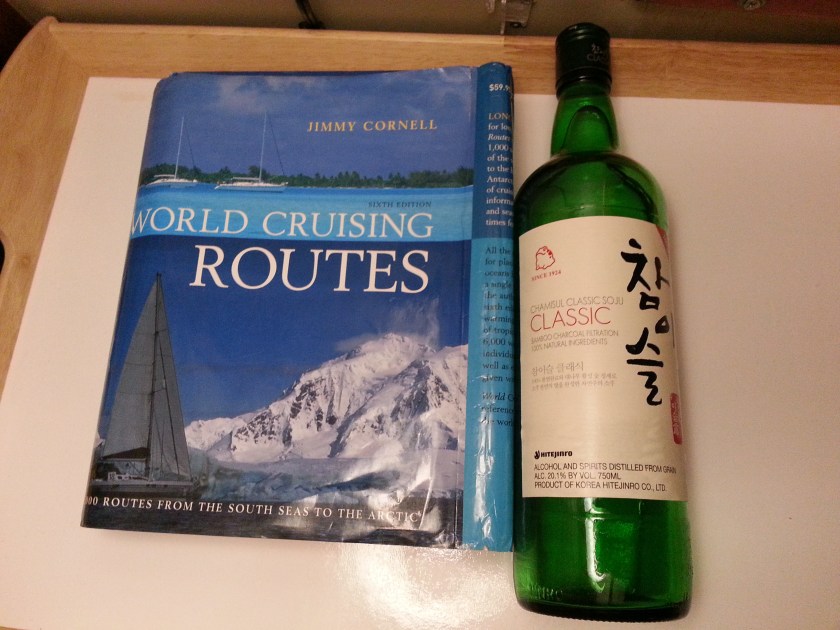


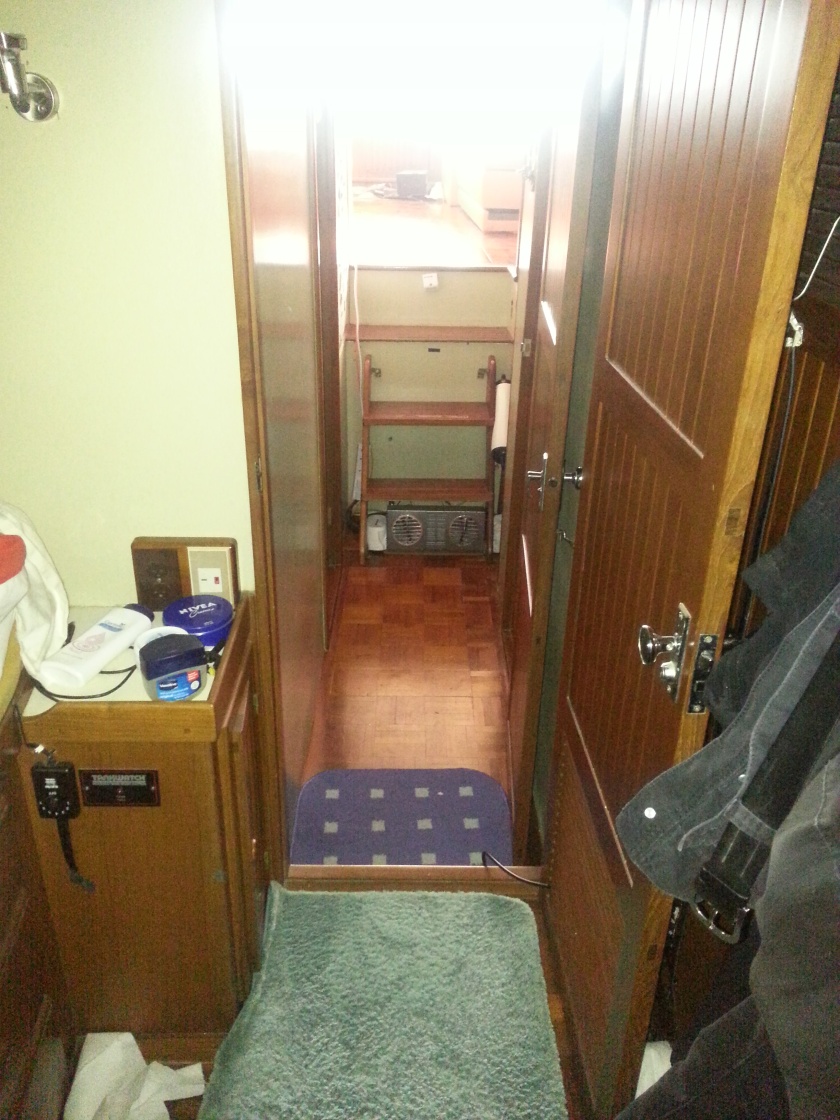


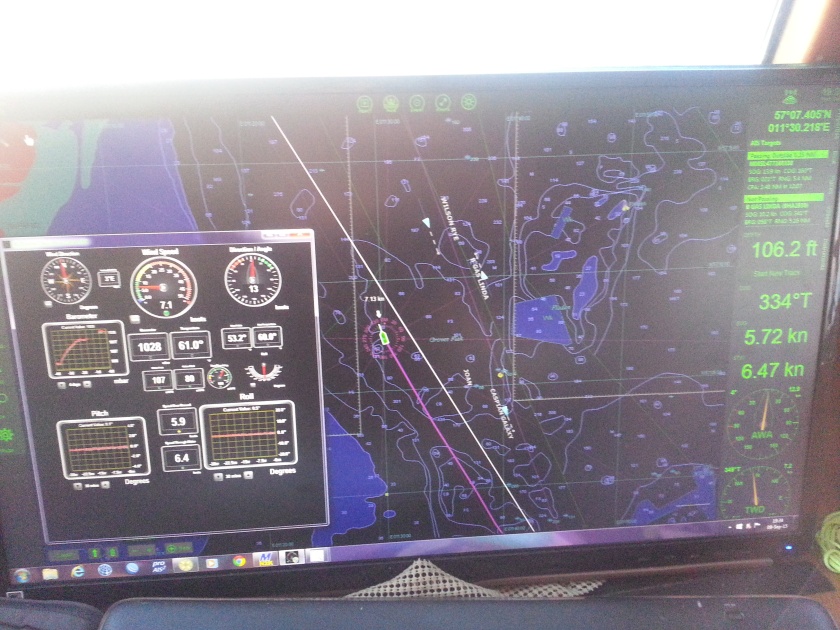

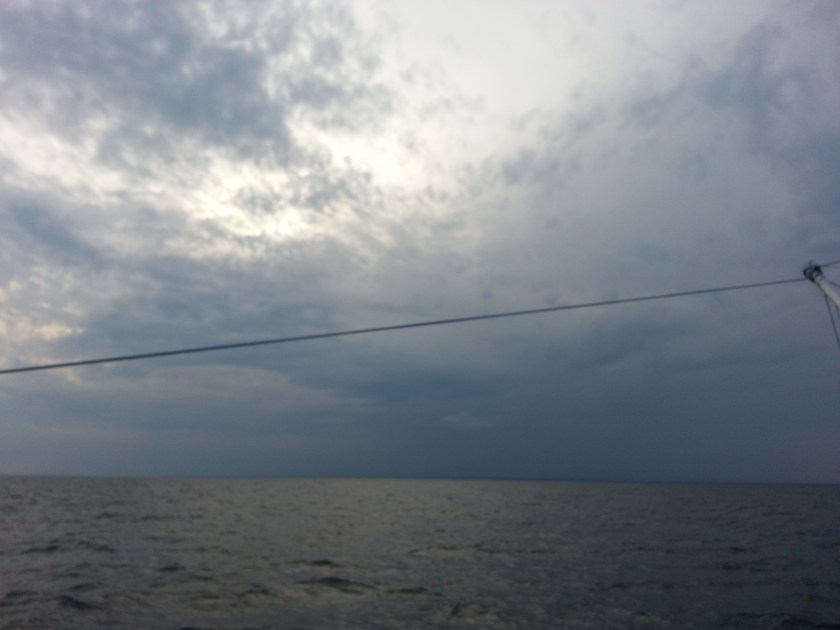
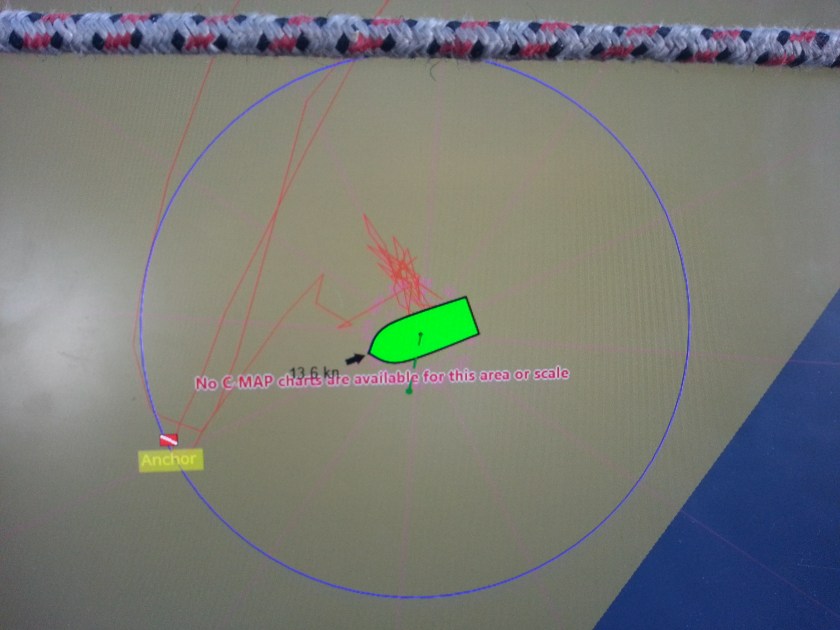
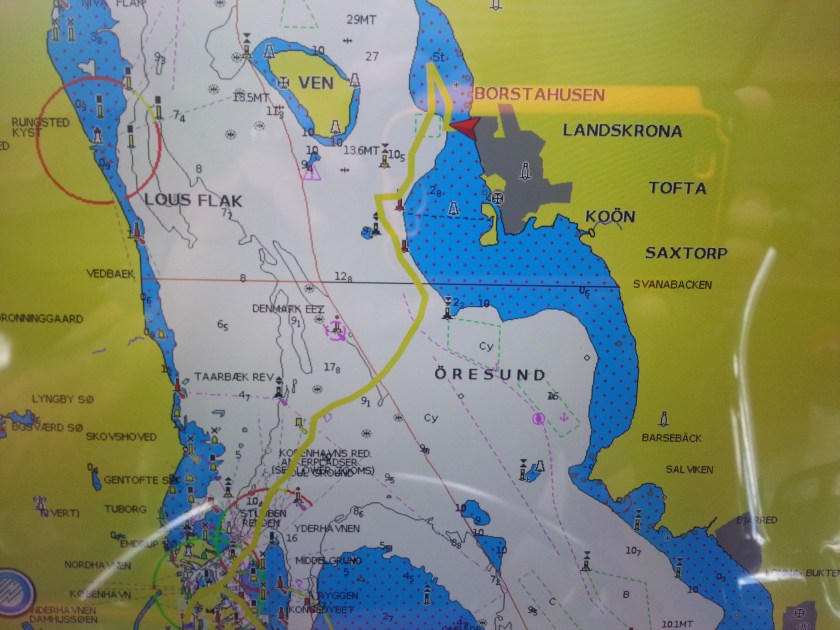


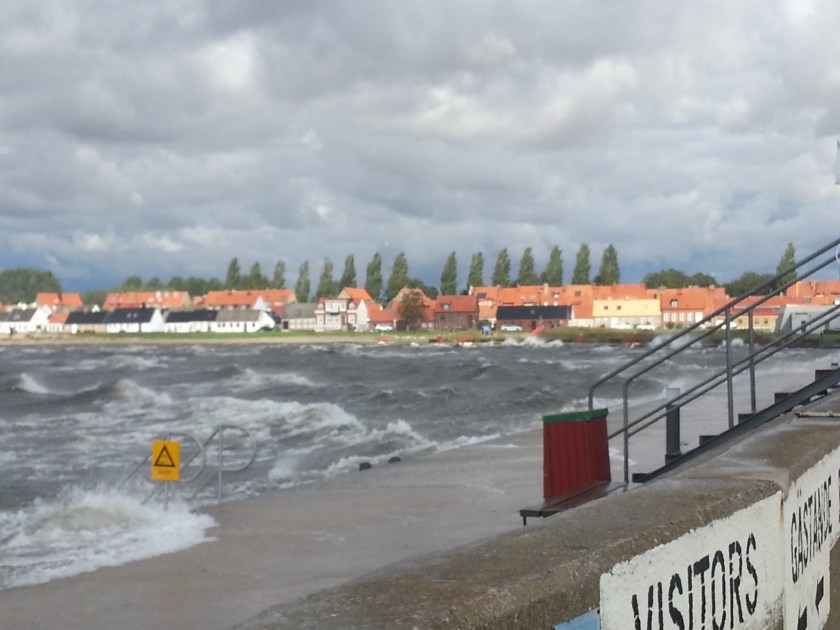

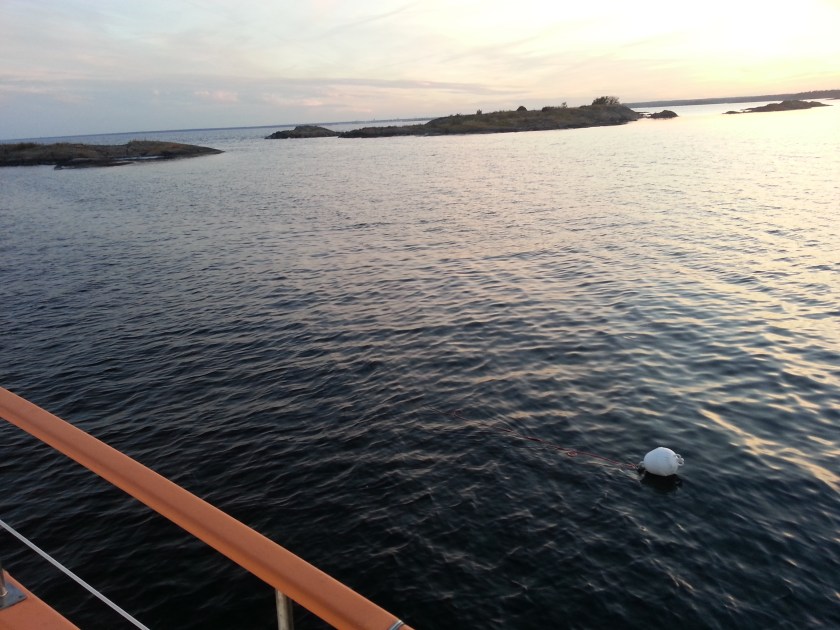

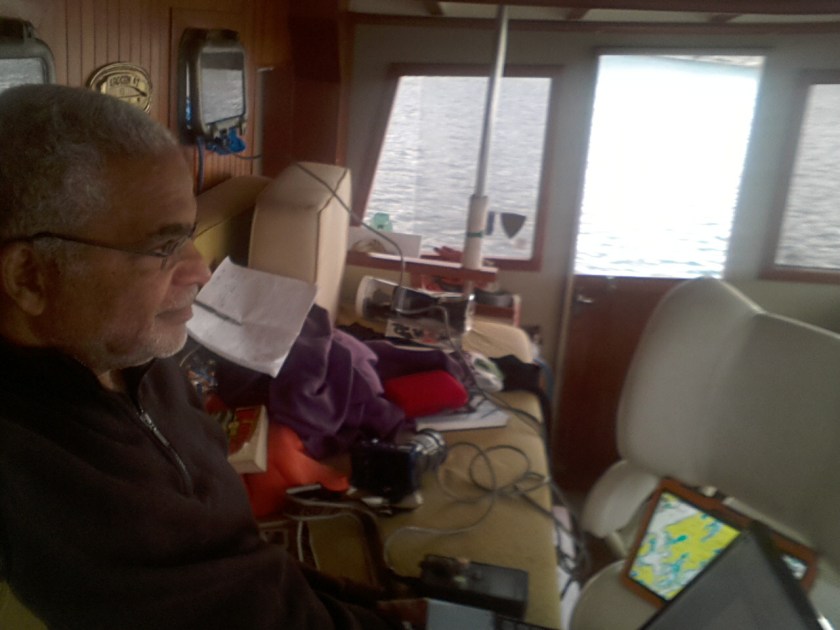

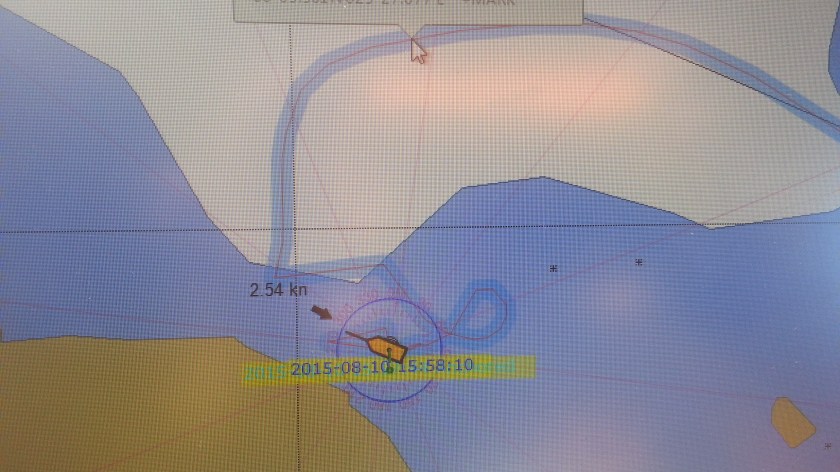


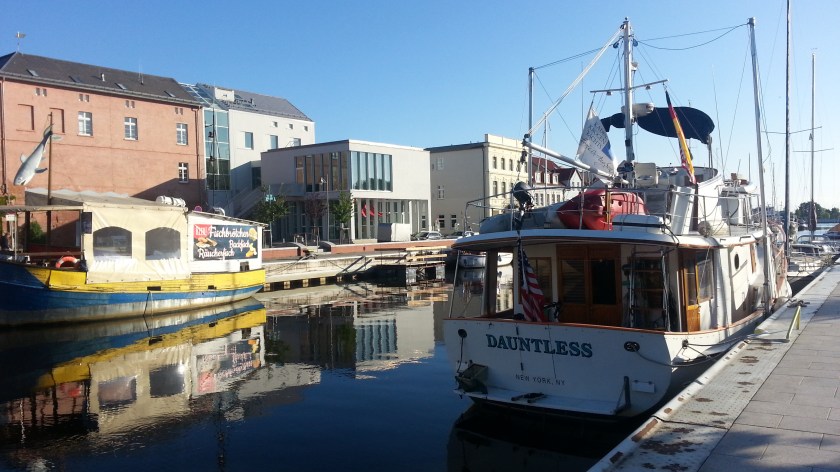


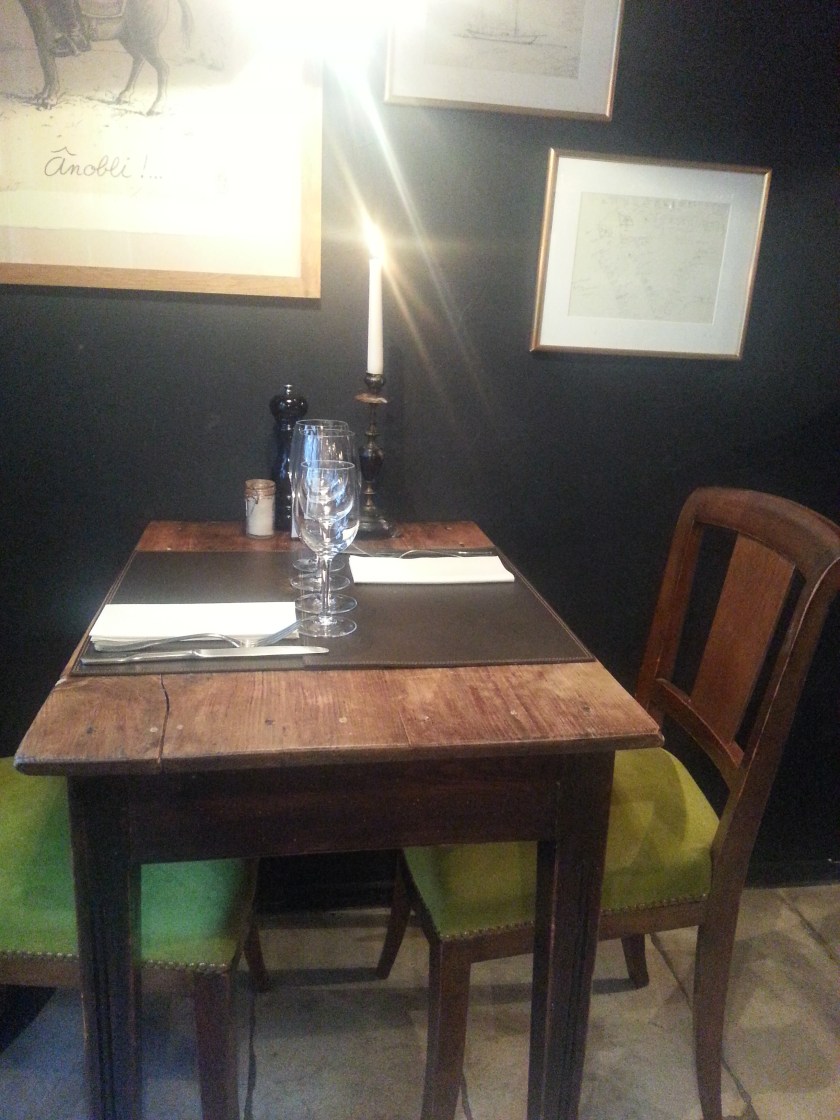


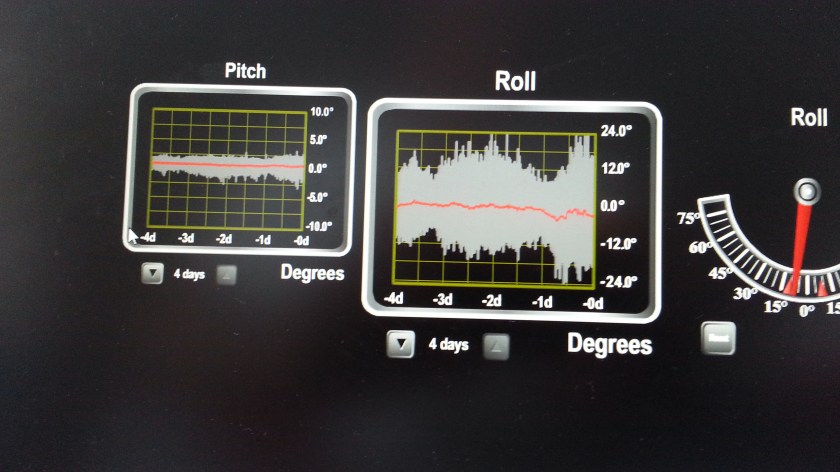


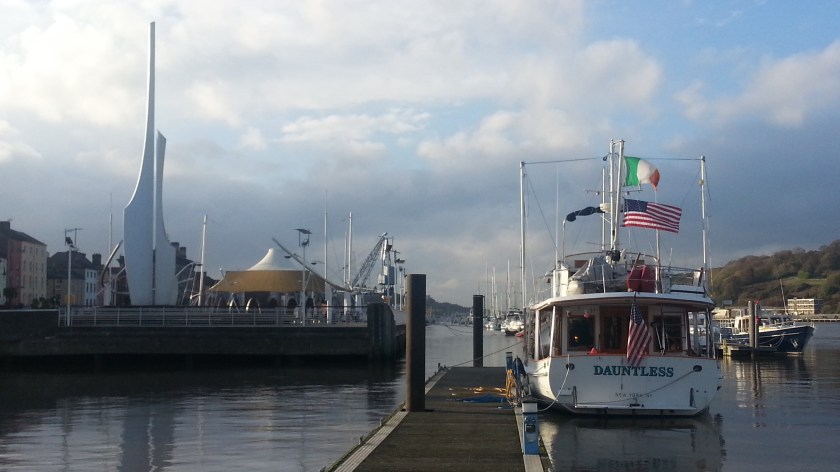
 Dauntless at Sea